Being Comfortable with Being Uncomfortable: Lessons from a NATO Advanced Research Workshop (ARW) in Türkiye
Blog post written by: Ian Hall
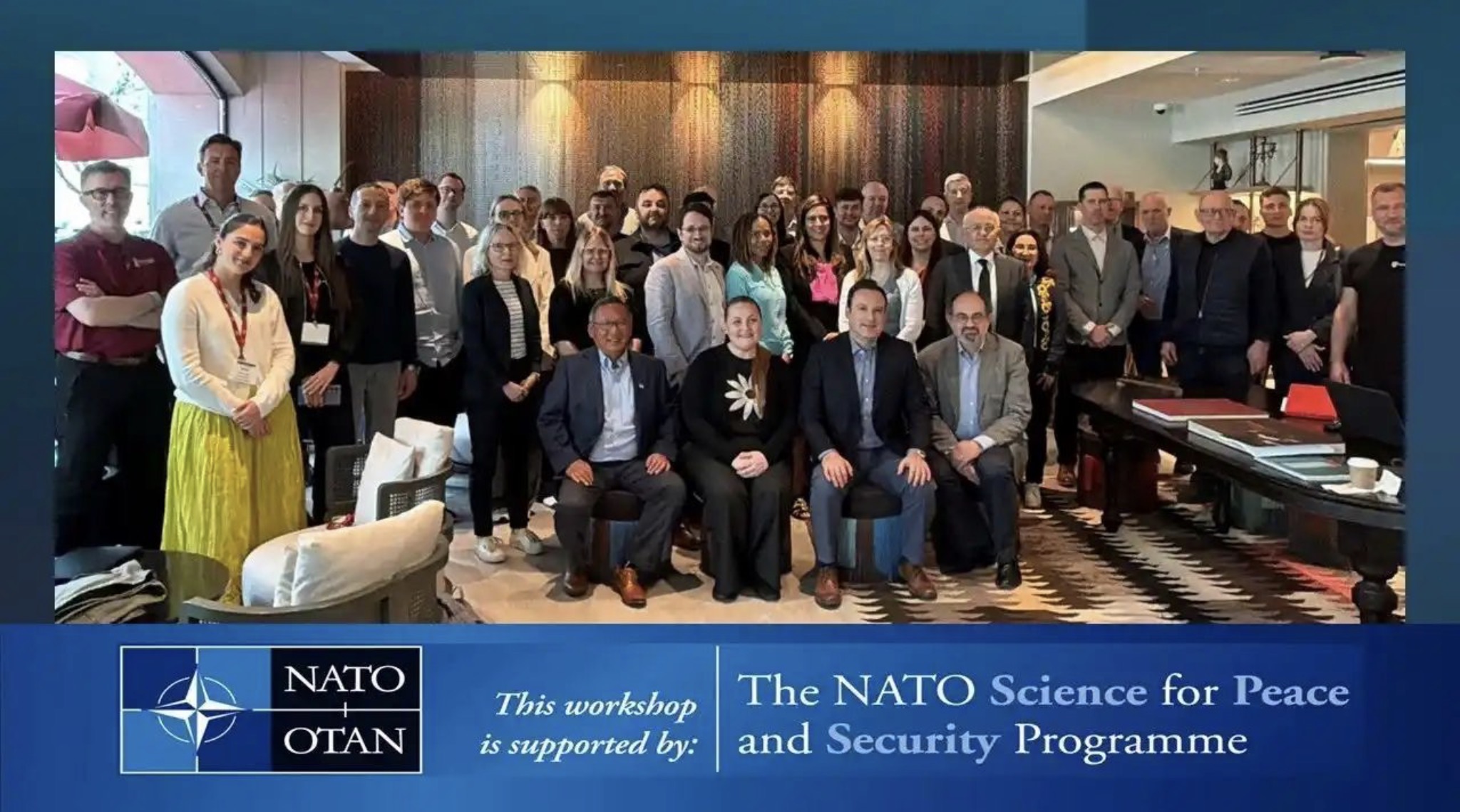
Attending a NATO ARW in Türkiye last month was an exercise in learning how to get comfortable with being uncomfortable. From the outset, the workshop felt like a new Community of Practice I had joined, alongside others working in resilience modelling, supply chains, and contested logistics, areas where I have little technical expertise. Despite that formal inclusion, I felt the unsettling presence of imposter syndrome.
When I arrived, there was an immediate sense of belonging. Several participants were people I already knew from previous ARWs, however there was a much larger group of world-leading experts that I had not previously met. Chatting to senior military leaders, resilience modelling experts, and people embedded in governmental policy, I became aware of how far out of my depth I felt.
Despite feeling accepted by a, I still felt like an outsider in conversations with others. Rather than withdrawing, I decided to approach rest of the workshop with a deliberate intention: to network, seek out new knowledge, with the aim to connect the specialist expertise of others with my more generalist understanding. That approach did not eliminate the discomfort, but it gave me a way through it. In my PhD, I find I must stay present in unfamiliar debates long enough for them to become part of my thinking.
A turning point for me came during a Working Group session. Tasked with producing an outline for a book chapter on the tools and methodologies for modelling resilience in supply chains and contested logistics, I found that only one had participated in a previous ARW. It was here that I realised my knowledge could play a meaningful role. Having worked on book chapters from previous ARWs, I was able to connect specialist contributions into a coherent structure, an experience that mirrors the PhD task of shaping diverse literature and ideas into a robust argument.
As the work progressed, I felt more comfortable acknowledging what I did not know while still contributing value. Around two-thirds of the group were practitioners rather than academics, working in highly specialised areas of industry. Sitting at the intersection of academia and industry, I realised this dual role carved out a niche I had not fully recognised before.
Looking back, “being comfortable with being uncomfortable” is not a slogan but a practice. For me, it means acknowledging the tension of being inside a Community of Practice. It means choosing curiosity over retreat, listening carefully, asking questions, and engaging honestly with uncertainty. Those conversations revealed something important: others were often equally uncomfortable, but less willing to name it. The same pattern shows up in my PhD journey, where my confidence often grows not from certainty, but from staying engaged with ambiguity.
The workshop reminded me that imposter syndrome is normal when entering a new Community of Practice and is not a sign of failure or exclusion. It often signals learning; when expertise is deep and diverse, discomfort may be inevitable, even necessary. That is the reassurance I am taking into my PhD: the uneasy moments, when the theory feels unfamiliar, or my contribution feels small, are often the moments in which my thinking is changing and learning is taking place.
Posted on May 20, 2026, in Doctoral journey, Graduate School, PGR Blog Posts and tagged Graduate School, PGR Blog Posts, Postgraduate research students, Research Degree Students. Bookmark the permalink. Leave a comment.


Leave a comment
Comments 0