Category Archives: Doctoral journey
PGR meetups
Blog post written by: Dr Heidi Kharbhih
For a month the PGRs have been meeting on Teams once a week to connect and share stories. There are a few regulars who enjoy coming each week and others pop in and out depending on their priorities. It’s a beautiful collection of souls, brought together by their desire to progress research. All different fields, from all over the globe, coming together at Northampton. Each at various stages in their PhD journeys and yet all facing similar challenges and each one benefiting from the support network.
In the sessions we have shared our fears, our self-doubts. Those at the start of their journeys feeling the imposter syndrome and the daunting task ahead, peering into the vast unknown, learning the new language that comes with the research territory. There’s an abrupt realisation that we don’t know what we don’t know but we are humbly aware we have a lot more to learn. Those at the end of the journey experiencing a kind of grief that their quest is over, they have achieved the goal they have been striving to achieve for years and now what. An empty space, a dreamless void waiting to be filled. The end of one identity becomes a happy fool, taking a leap into the uncertain future. Saying goodbye to the university support network, the supervisor steps away, the fellow researchers scatter across academia and beyond. There’s also all the researchers inbetween, struggling with ethics and transfers and honing their direction. Finding motivation to push through the hard parts. It’s all there in our PGR group. All stages welcome, each story of struggle resonates, through a shared understanding of what this journey entails.
It’s ok to ask questions about technical aspects. Hearing about research platforms that can search multiple journals, about ethics principles for non contact research, exploring literature review methodologies and cross-border collaboration and authorship etiquette for publications. Emotional support is perhaps even more critical. Group wisdom offered freely, a gift from the research gods much like the morale boost for the exhausted, the overworked, the single parent juggling kids, work and research. Recognition of the struggle and the brilliance illuminates the research pathway once more, just enough to continue, to succeed.
Special because of the shared research connection and yet the same as everyone else on the planet. We’re all looking for connection, significance, love, meaning, growth, variety and safety. Tentatively asking for help at first and then realising this group is phenomenal. Generous, open-minded, full-hearted.
Come join us, your insights and perspective will be welcome. We meet on alternate Thursdays at 7pm (from 10th Sept) and Fridays at 9am (from 18th Sept). Hopefully regardless of work and family commitments one of those times will suit. You’re welcome to come just once or twice if you wish. You can join late or leave early, or even be the regular each week or once a month. You can simply listen and stay quiet with your video off or you can chip in and take the podium. Whatever works for you, will work for us. Because we’re there for each other. Forging new bonds. PGRs past, present and future are all welcome.
Everything within the group remains confidential. Though with PGR representation on the Social Sciences Research Degree Board, the group can also raise practical issues to the University for resolution, if desired.
If you are a UON PGR and you’d like to receive the PGR Group Meetup calendar invites, ping Heidi an email on heidi.kharbhih@northampton.ac.uk
Looking forward to seeing you there. Love and light. Heidi
Three Months In: How My PhD Journey in Parapsychology Began (And Why It Feels Like Coming Home)
Blog post written by: Dr Heidi Kharbhih
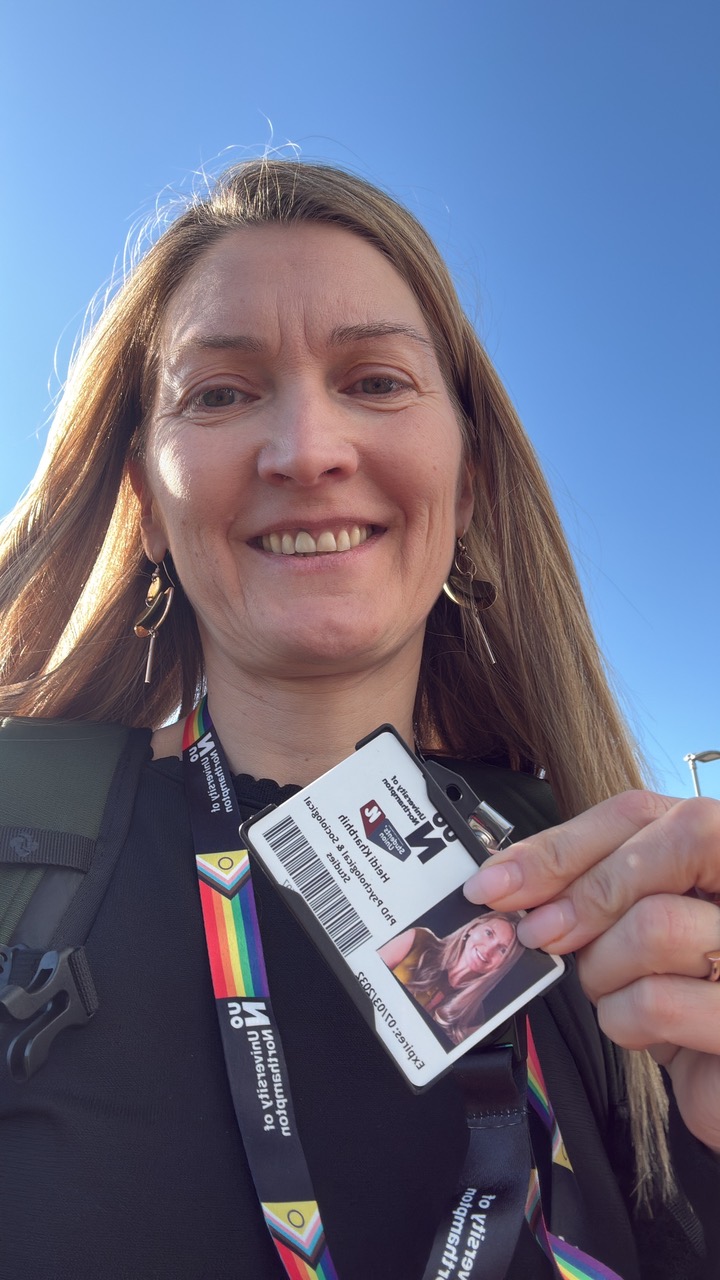
3 months since I started my PhD at Northampton University and I’m loving it!
You know when life flows and things just fall into place, well that’s exactly my experience with starting this research. In this article, I want to share the journey so far, how I chose my research topic, the application process, securing funding, what the first 12 weeks involved, my early supervisory meetings and some reflections on what it feels like to return to academic research in a field that has fascinated me for years.
Before applying to a university you first need a research topic. Choosing mine took a lifetime. To explain why, I need to take you back to 2015. I delighted in reading books like Rhonda Byrne’s The Secret and Journey of Souls by Michael Newton, During long car journeys, I listened to podcasts featuring Seth material and Esther Hicks. While doing the ironing I watched documentaries exploring consciousness and quantum theory. I attended psychic development courses and became captivated by subjects related to personal growth, spirituality and human potential.
Over time, I trained as a life coach, meditation practitioner, Reiki master, trauma-informed breathwork therapist and in several other complementary disciplines. I integrated these approaches int my work, tailoring support to the needs of individual clients. As I continued my own personal development, something began to shift. My priorities changes. Abilities and intuitions that had ling been dormant seemed to re-emerge, and I developed a growing sense of connection to something larger than myself.
Anyone who embarks on a deep journey of healing and self-discovery may recognise this experience. As old patterns fall away, you begin to understand more clearly who you are and who you want to become. Sometimes the activities, environments, and even relationships that once felt aligned no longer fit the person you are becoming. It was as though I got an upgrade to Heidi Version 2.0.
Meditation became a daily practice and one of the highlights of my day. It was not unusual for me to meditate for two hours or more a day. Had I not had children, I might have disappeared into a monastery – or perhaps a nunnery – to meditate all day. It was wonderful, the peace, love, joy and sense of connection it brought me were unlike anything I had ever encoutered before. This was a journey I wanted to go deeper with, what began as a curiosity became a calling.
As my gifts manifested, I connected with other worldly spirits, I saw things others could not see, I received messages from a higher intelligence, I knew things before they happened, I sensed things beyond the physical. These experiences did not fit the material world and Newtonian physics we are taught at school. Yet they were more real and resonated so deeply I could not deny them. I began to speak of these events with my friends and family and would often get strange looks and quizzical smiles, a nod followed by awkward silence. Other times, someone would divulge in a whisper something similar happening to them. In this society extraordinary abilities are a taboo subject, the word “woo woo” and “crazy” would be used to dismiss events and keep the experiencers quiet. So the research goes underground, you find a few people like you who are open and curious and you share in those special circles. I wanted to hear more from others like me and understand their journeys. How did they develop their extraordinary abilities? Had they always had them? Did it run in the family? This is the most fascinating part of my life, it’s a whole other world that brings so much meaning into my existence, the reason why I am here.
In Autumn 2025 I decided to pursue academic research opportunities. A search online revealed a few specialist departments in the world. I was already aware of IONS and The Monroe Institute but I wanted something based in the UK. I’d taken courses at the College of Psychic Studies and was aware of the Arthur Findlay College but when investigating grants and research, I discovered you could actually undertake research in parapsychology at University. If I had known this 30 years ago, I certainly would not have done Mathematics (my first PhD)! Edinburgh and Northampton both had respected research departments, I made my enquiries. I was leaning towards Northampton because they are one of the few universities where paranormal topics are an established research area and they have strong connections to the wider psychical research community (such as the Society for Psychical Research, The Tanous Foundation, California Institute). Prof Cal Cooper was quick to respond and invited me to the SPR conference 18/19 October. I listened to talks from people like me, on subjects I had been interested in for years. It felt like I belonged. Meeting with Prof Chris Roe and Prof Cal Cooper at the end of the event, I discussed my initial research ideas. Cal invited me to the Broughton Award on 14th November held by the ‘Exceptional Experiences and Consciousness Studies’ research group and gave me a tour of Waterside campus. I was particularly enamoured with the Ganzfeld set up. We discussed my draft research proposal, requirements for submission, timelines and potential funding routes.
27th November I had an online meeting with Chris Roe and Cal Cooper and received some useful feedback on the scope of my research. I made a few tweaks to my research proposal.
1st December I submitted the revised proposal and made a formal application to join the postgraduate research programme on the Northampton University Admissions portal. Hoping that funding would follow, as the fees were a prohibitive factor for me.
8th December, I applied for a research grant from the Tanous Foundation, attaching my research proposal.
18th December, I had an induction meeting with Chris Roe and took part in one of the Ganzfeld research experiments, which was really fun.
23rd December I received an invitation from Michelle (the admissions tutor, for an interview the following month.
22nd January I attended the online panel interview, which Chris, Cal and Michelle attended.
23rd January I received an unconditional offer for a part-time 6 year PhD in Psychological and Social Sciences. This was so exciting. I was going through some personal struggles at the time (getting divorced, moving home, setting up from scratch, single parenting and all that), so the news really did lift me up at a time when I needed it most.
23rd February, I received confirmation from the Tanous Foundation that they approved my funding request and would cover the full fees for the first year, as well as provide extra funds to attend conferences. I was absolutely overjoyed.
Everything fell into place so easily.
The PGR induction 16-19th March on campus was incredible. Such a thorough, welcoming, friendly, informative few days. 20+ postgraduate researchers attended the talks and workshops about ethics, research methods, publications, library resources, software, log/ins, campus tour, meeting other postgrads and sharing free lunches together. The induction was amazing and the free resources (endless training courses and access to publications) that the university provide researchers are incredible.
1st April was my first supervision meeting with both Chris and Cal. We talked about the expectations I have from my supervisors and they have from me and we agreed our way forward. I had already completed the compulsory online ethics training modules so at least that box was already ticked off. I shared some ideas I had about my literature review approach, initially thinking I would explore a PRISMA based approach. Which is a structured method of identifying , selecting and synthesising research using predefined criteria to answer a narrowly focused question. Chris gently recommended I look at the pros and cons of that approach versus other approaches.
22nd April, at my second supervisory meeting, I shared my findings and my choice not to follow the PRISMA approach after all (good call Chris). Instead I selected an integrative approach to include diverse literature across qualitative, quantitative and interdisciplinary domains, ensuring a broad and inclusive evidence base. I wanted to apply a critical review lens to identify patterns, themes and dominant frameworks, while also challenging the underlying assumptions and highlighting theoretical limitations and gaps. There was only one thing holding me back, I did not know where to find the relevant publications to ensure my search was comprehensive. My previous PhD was a very specific field in Mathematical modelling with explicit key words and only 2 prominent researchers in the field so the pool of papers was extremely narrow and easy to identify. This research however is exploring the developmental pathways to extraordinary human abilities. The field is huge, there are tens of thousands of publications on psi, telepathy, mediumship, energy healing, shamanism, consciousness studies, and so on. How do I make sure I extract all the relevant published works? Cal shared 7 key parapsychology journals with me and recommended I go through all the titles and abstracts of the past publications and pick out the papers that are relevant to my research. This I can do. Hhmmm so how far back do I go? 30 years? More? I don’t know yet.
Inbetween my second and third supervisory meetings Chris asked me if I would like to be a student representative on the Social Sciences Research Degree Board. Typically the meetings are every quarter for 2 hours. As a student rep, you ask the other postgraduate researchers if they have any issues they want to raise and you represent them in the meetings. I attended as an observer on 11 June and was given a warm welcome by the Board.
12th June, in my third supervisory meeting, I shared my experience and approach of exploring the journal publications. There is more in the field than I first thought, which I am happy about, as it will help inform my approach to interviewing experts with extraordinary abilities and which questions to ask. I have been collating book and papers. As I read each one, if I find the topic relevant, I record 3 things.
1. What the research is exactly. along with my impressions and a few quotes that resonate with me
2. Recommended steps to awaking your extraordinary abilities or noted positive correlations
3. Methods of investigation, e.g. which questions did they ask their participants?
During this meeting, we also talked about future conferences and what I could present where and agreed to aim for a presentation in September and a November presentation at SPR, which could double as my preparation for Transfer. Chris and Cal shared that my Initial Research Proposal has been reviewed at the SSRDB and I should receive an email shortly. They were determined not to spoil the surprise, so fingers crossed.
In my fourth supervision meeting, scheduled 29th July, I will share some of my literature review findings with Chris and Cal. At the moment it’s just a vast collection of ideas without a connecting flow, so I will try to put it into a logical order ahead of that meeting as well as read, read and read some more.
So 12 weeks into my PhD and I am already feeling slightly less like an imposter and more like an expert, starting to recognise the key names in the field and learn all the terminology. It really is another language. Slowly making progress and thoroughly enjoying the process. Shout out to The Tanous Foundation, all the amazing PGRs from the induction and all the staff and researchers in my department. I have deep gratitude to know you and be an active part of this wonderful supportive community. Thank you.
Being Comfortable with Being Uncomfortable: Lessons from a NATO Advanced Research Workshop (ARW) in Türkiye
Blog post written by: Ian Hall
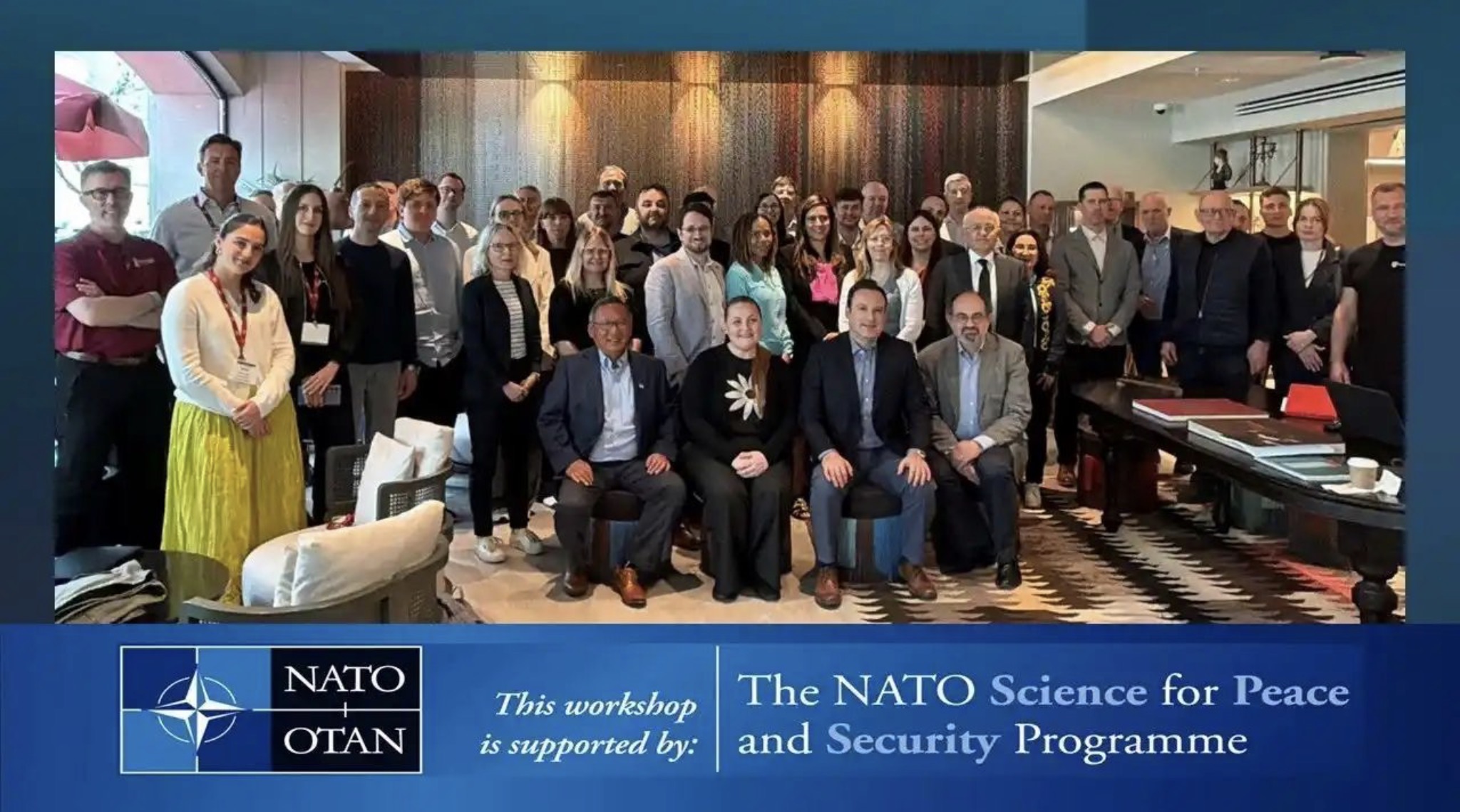
Attending a NATO ARW in Türkiye last month was an exercise in learning how to get comfortable with being uncomfortable. From the outset, the workshop felt like a new Community of Practice I had joined, alongside others working in resilience modelling, supply chains, and contested logistics, areas where I have little technical expertise. Despite that formal inclusion, I felt the unsettling presence of imposter syndrome.
When I arrived, there was an immediate sense of belonging. Several participants were people I already knew from previous ARWs, however there was a much larger group of world-leading experts that I had not previously met. Chatting to senior military leaders, resilience modelling experts, and people embedded in governmental policy, I became aware of how far out of my depth I felt.
Despite feeling accepted by a, I still felt like an outsider in conversations with others. Rather than withdrawing, I decided to approach rest of the workshop with a deliberate intention: to network, seek out new knowledge, with the aim to connect the specialist expertise of others with my more generalist understanding. That approach did not eliminate the discomfort, but it gave me a way through it. In my PhD, I find I must stay present in unfamiliar debates long enough for them to become part of my thinking.
A turning point for me came during a Working Group session. Tasked with producing an outline for a book chapter on the tools and methodologies for modelling resilience in supply chains and contested logistics, I found that only one had participated in a previous ARW. It was here that I realised my knowledge could play a meaningful role. Having worked on book chapters from previous ARWs, I was able to connect specialist contributions into a coherent structure, an experience that mirrors the PhD task of shaping diverse literature and ideas into a robust argument.
As the work progressed, I felt more comfortable acknowledging what I did not know while still contributing value. Around two-thirds of the group were practitioners rather than academics, working in highly specialised areas of industry. Sitting at the intersection of academia and industry, I realised this dual role carved out a niche I had not fully recognised before.
Looking back, “being comfortable with being uncomfortable” is not a slogan but a practice. For me, it means acknowledging the tension of being inside a Community of Practice. It means choosing curiosity over retreat, listening carefully, asking questions, and engaging honestly with uncertainty. Those conversations revealed something important: others were often equally uncomfortable, but less willing to name it. The same pattern shows up in my PhD journey, where my confidence often grows not from certainty, but from staying engaged with ambiguity.
The workshop reminded me that imposter syndrome is normal when entering a new Community of Practice and is not a sign of failure or exclusion. It often signals learning; when expertise is deep and diverse, discomfort may be inevitable, even necessary. That is the reassurance I am taking into my PhD: the uneasy moments, when the theory feels unfamiliar, or my contribution feels small, are often the moments in which my thinking is changing and learning is taking place.
The PGR Induction Experience
For me, this was re-treading old ground anew. For me, this was a small, calm homecoming. Although I have been back to the Northampton area since I was last a student there a few years ago, I have not set foot onto campus in quite some time. Not since I was robed out for a graduation. That ceremony in all its robed circumstance felt like the termination of something special; now, being inducted once more at the University of Northampton, that special something is being revisited and re-experienced. That being my ongoing relationship with this incredible institution. If I sound whimsically nostalgic to the point of emotional, that is because I very much am – I did both my BA and my MA with UoN. Returning in 2026 for my PhD is a full circle moment and also an arrow fired into the unknowable future. The campus hasn’t changed since I was last here those few years ago: it’s still square and grey and shiny, it’s still clean and sparse yet alive with action and business, but I feel very different. When I first came here for an open day I was seventeen, clueless, overwhelmed and less well-academically clued in than I am these days. Now, at twenty-five, I really appreciate UoN for what it is when I step once more onto the contours of campus – it is a space for curious minds to come up for air, it is curvaceous glossy buildings dedicated to your passions, it is endless helping hands and wise minds. Being here again reminds me of why I want to join everyone in the pursuit of the academic. This time round, however, I’ve got no classmates, no cohort, no lecture timetable – there’s just me and my doctoral project. That really is quite thrilling.
Induction for Post-Graduate Researchers is a four day event. As someone from out of town, and therefore someone who will be doing their PhD nearly totally remotely, that means a lot of thinking time commuting in the rush hour traffic for four days. I think about how many times I have done this journey since I was an undergrad fresher in 2019; I could drive it blindfolded. I think about how unbelievably lucky I am to have such a strong supervisor team and academic department to guide me over these next years of study. I think about how, this time, I am going to take a good ID card photo as the last two were so dire. Alas, on the first morning, I am given a new sparkly university email address and a new pre-printed ID card. Whilst the turnstiles are now open to me, I don’t spot any cameraman. Then I see it: the photo of myself I had to upload for my application. I stare back at myself from the small white rectangle that unabashedly boasts the end date for my course six years from now. A scary date, but a good ID photo finally. We’re off to a good start.
In terms of information and being informative, UoN’s PGR induction program is top of the range. Inductees are spoilt for information. Indeed, by the fourth day, I have received enough factoids, titbits, pieces of advice and resources to satiate six years of doctorate study. And, as a tried and tested technophobe, I have even started to be converted to the university’s multitudinous systems. The main takeaway: don’t get overwhelmed, it’ll all make sense fast. And whatever doesn’t, doesn’t matter! I am now a few weeks into my project and the overwhelm has subsided as I have made sense of everything that is thrown at inductees. Keep your eyes and ears open during induction sessions – it will all come in handy at some point. I thank every person involved in all four days, in particular their welcoming demeanour. I always feel that I am in safe hands, that any question will be answered, that everything has been thought of. I am reminded of how I felt at eighteen starting my undergrad: UoN knows how to take care of its students and researchers.
Lunch is also provided each day. Never turn up such a rare opportunity for a free meal. Thank you to the caterers, you made a room of anxious inductees much more relaxed.
The induction took place at the proverbial top of the world: the Learning Hub’s Leatherseller’s Hub, with a panoramic view of Northampton town. For mid-March, the weather was stunning. I constantly found myself staring past the sessions’ screens and out to the cloudless skies over the four days, and feeling giddy to be back as a student. I have so many memories in this library. Indeed, on the first day of induction, I went to my favourite section of the fourth floor bookshelves as I used to a daily basis on my undergrad. I picked up the books that I read in my first year, still sat on the shelves ready to be explored again. I thumbed through copies of texts I had snuck into the library for in my face mask during my years of lockdown degree. Now I select books that I will use for my PhD – a project I never actually thought would come to be. It is only by the generous encouragement and support of UoN staff across both my department and the graduate school that I have felt brave enough to take on this next academic level. Having felt that it was beyond reach since graduating from my MA, I feel proud to be starting my PhD experience.
My doctorate project is a personal one for me. One of the most fascinating takeaways from the induction week is actually how different each person’s project is from everyone else’s in the room. Indeed, whilst I watched many of my colleagues grapple with data handling, research plans, the nitty-gritty of medicine, computing, law, psychology, I felt far more abstract. My project is a PhD By-Practice, specifying in creative writing. Rather than conducting a study or research, instead of number-crunching and interviewing participants, I have to simply…write. There’s more to it than that, of course, and I believe in the proposal I have set out with the university, but a lot of the induction sessions I felt didn’t apply to me in my creative bubble. This, of course, is not the case; each session contained something vital on how to be a PGR. Whether ethics, integrity, or the turmoil of using all of the sites and online tools available to students, there is a lot of responsibility to doing a doctorate, and the induction days presented these with the correct jovial gravitas.
As I begin my project, and the creative juices start to flow, I am keeping in mind that I am now a part of something bigger, that something special I mentioned earlier – I am now another member of the University of Northampton’s respectable research machine. I am part of its academic community; I am once again undertaking exciting studies in an institution I know and trust. As are all my fellow inductees, all about to branch off in newfound thought-provoking pathways of PGR-ing. With my new black lanyard in hand, and a few obligatory online courses to tackle, I depart from campus on the last sunny day feeling fulfilled, daunted, energised and ready to start researching. Four days down, six years left to go…
Blog post written by: Joe Butler
5 Things I Loved About the PhD Induction Week
Starting a PhD can feel a bit vague at first, so induction week was actually really helpful in making things feel more concrete. Instead of trying to cover everything, I thought I’d share with you five things I really loved about the induction week.
1. How genuinely welcoming it felt
From the moment we arrived, it didn’t feel stiff or overly formal, which I think everyone was probably half expecting. Lina, Xose, Matthew, and the rest of the team were brilliant and made a real effort to create a relaxed, open atmosphere. It made it much easier to settle in and just get on with it rather than overthinking everything.
2. Realising everyone is a bit unsure (and that’s normal)
Talking to other PhD students was probably the most reassuring part of the week. Whether people were just starting or already a year, two, or more in, there was a shared sense that no one really has it all figured out. And that was … oddly comforting. It made the whole process feel a lot more doable and a lot less like you’re supposed to have a master plan from day one.
3. Hearing what other people are working on
Listening to people talk about their research was another highlight. There was such a mix of topics, but what stood out the most was how much thought and care these researchers put into their work. It was one of those moments where you realise you’re in a room full of genuinely interesting people, which was both humbling and motivating at the same time.
4. Letting go of the idea that everything has to be perfect from the start
A big shift for me came from the more informal conversations during the week. It became clear quite quickly that research proposals aren’t set in stone and that changing direction is not only allowed but expected. That took a lot of pressure off. It made it easier to see the PhD as something that develops over time rather than something you have to get exactly right straight away.
5. The sessions that stayed with me
Some sessions naturally stood out more than others. Dr Patrice Seuwou’s session on equality, diversity, and inclusion was one of them. It led to some really interesting conversations and got me thinking about things I hadn’t really considered in depth before. It’s also probably where a new research interest started to form, which I wasn’t expecting going in.
Alongside all of that, the more practical sessions on ethics, time management, tools and expectations were useful in giving a clearer idea of what’s ahead. Nothing felt overwhelming, but it made it clear that there’s a lot to think about beyond the research itself.
Overall, the week made the whole idea of starting a PhD feel less like stepping into the unknown and more like joining something that, while still challenging, is shared with others going through the same process.
Blog post written by: Andra Abu Ghuwaleh
PGR publication – ‘Saccharomyces cerevisiae’ as a Model for Reprogramming of Eukaryotic Cells: Implications for the Study of the Relationship Between Metabolism and Inflammation in Chronic Disease
Neill Friedman is a biochemistry Ph.D. candidate at the University of Northampton, researching mitochondrial function and metabolic health. A former telecoms entrepreneur, Neill entered higher education at 52, completing a Sport and Exercise BSc at UON, after overcoming obesity and a late-diagnosed learning disability. His journey from personal transformation to scientific research reflects a deep commitment to lifelong learning and the power of second chances. He is passionate about demystifying science for mature learners and exploring how lifestyle influences cellular health.
The published paper, a collaboration between Neill his supervisor Dr Alexander Lehner and UON Biochemistry undergraduate student Glirstar John De Britto, details a novel model for examining mitochondrial reprograming in eucaryotic cells and discuses the possible implications for developing a better understanding of the relationship between lifestyle and health.
Here is the link to the paper: https://link.springer.com/article/10.1007/s12013-025-01844-w
My UON Journey and Experience of the Images of Research (IOR) 2025

My educational journey at the University of Northampton (UON) has been a long and fulfilling one. I began with a BA in Business Entrepreneurship and Management, followed by an MSc in International Marketing Strategy. I am now pursuing a PhD focused on the Adoption of Responsible Human-Centred Artificial Intelligence (AI) in UK and Maltese Agriculture. My research explores the perspectives of agricultural professionals on adopting AI technologies and responsible AI practices.
Recently, I entered the Images of Research (IOR) 2025 competition. Although my research is rooted in the social and business aspects of AI adoption in agriculture, translating those concepts into a single, accessible visual image was a unique and creative challenge. The competition brief invited participants to design a distinctive image (whether a painting or photograph) that artistically captured the essence of their research, along with an engaging title and a 150-word summary.
The Graduate School provided clear guidance, including a rules and guidelines document and examples of previous entries. Lina was also incredibly helpful in answering any queries I had throughout the process.
This year’s competition featured 11 submissions and included two awards: the People’s Choice (won by Clare Moss) and the Judges’ Choice, which, to my surprise and delight, was awarded to me. I had entered with no expectations, only a desire to gain experience and learn from the process. I never imagined I would be selected as the judges’ winner.
Creating my IOR image gave me a chance to express my research visually, in a way I hadn’t done before. I used a photograph of a vibrant Maltese pomegranate field as the backdrop, rich in colour and symbolic of tradition and cultivation. The image is split into two halves, like a visual balance scale. On the left stands a traditional Maltese farmer, seated on his tractor with his dog by his side, a warm, human moment that reflects the heritage and hands-on nature of conventional farming. On the right, in contrast, is a more modern Maltese field featuring an AI-powered irrigation device, symbolising the forward-looking potential of smart agriculture.
The image invites the viewer to consider how tradition and innovation can coexist. I aimed to keep the composition simple yet meaningful, ensuring that anyone, regardless of academic background, could grasp the essence of my research at a glance.
To my fellow PGRs: I wholeheartedly encourage you to take part in opportunities like this. Events run by the Graduate School are fantastic for expanding your research visibility, building your confidence, and connecting with others in the PGR community. Even if you don’t win, the experience itself is invaluable. You never know what you’re capable of until you try.
Finally, I would like to express my heartfelt gratitude to my supervisory team: Associate Professor Dr Tatiana Gherman (First Supervisor), Dr James Mshelia (Second Supervisor), and Dr Nadeem Aftab (Director of Studies). Their guidance and encouragement have been instrumental throughout my PhD journey so far.
Blog post by: Henrietta Farrugia
Re-defining, Re-exploring and De-claiming methodological research. Yes, to De-claiming

I’m so happy to have recently won the poster competition at our university’s 18th annual postgraduate researcher poster competition. As a current PhD student focusing on inclusion, particularly in culture, race, gender, and dyslexia (disability), I find this acknowledgement encouraging and energising.
My academic journey began at the University of Northampton (UON), where I earned my Master’s in Special Educational Needs and Inclusion (SENI). It was also at UON that I received support in being identified as dyslexic and subsequently excellent assistance in completing my Master’s. This emotional and challenging experience of being diagnosed late with dyslexia nurtured my passion for exploring this area and questioning why I was not identified earlier. It motivated me to pursue a PhD to explore the awareness of dyslexia in education, particularly concerning culture, race and gender.
When the poster competition was announced, I saw that one of the themes was methodology. I saw it as a fantastic opportunity to showcase my research on how I am exploring the educational experiences of Black African women with dyslexia within the UK educational system in a visual and accessible manner, as there is limited research in this area.
The application process was refreshingly straightforward, requiring only a brief abstract and a few details submitted via a Microsoft form. Designing the poster was enjoyable, although it was challenging to avoid overloading it with excessive information, and using Canva proved helpful. Printing the poster was equally straightforward. I used the recommended printers, Merland, for the printing service, and they were quick to print the poster and incredibly supportive throughout the process. The staff knew UON’s poster competition guidelines and offered guidance on layout, ensuring the final print appeared professional. Although there is a cost to print the poster, the university reimburses it.
I felt excited yet nervous on the day of the competition as I did not know what to expect. However, the atmosphere quickly calmed my nerves. The standards set by the other competitors were remarkably high; they conveyed their research in a manner that showcased their passion for it, and it was wonderful to observe the diverse approaches people took with their research. The judges were approachable and genuinely engaged with the work presented. Their questions were differentiated and engaging and resembled a conversation more than an interview or interrogation, making the experience enjoyable and enlightening. It was a fantastic opportunity to reflect on my work and gain fresh perspectives.
Although winning the competition was a proud moment, it was about taking part, getting exposure, and thinking outside the box for my research, which can sometimes be a lonely journey. I am thankful for the encouragement of my supervisors (Dr. Emel Thomas and Dr. Cristina Devecchi), ASSIST (Katie S), and the support of The Graduate School and the team at Merland.
If you are a student considering entering a poster competition, I highly recommend it. It is a fantastic way to share your work, build confidence, and connect with others passionate about making a difference in whatever field you are in.
Blog post written by: Aina Amure
Dr.App: NEW video support for postgraduate researchers & their supervisors
The Graduate School has purchased licences for Dr.App., designed for PGRs and staff supervising research degrees. Dr.App is an online video resource covering everything from working with supervisors and preparing for the viva examination to coping with stress and mental health challenges, from research impact to presentation and networking skills. It has content PGRs should find helpful at every stage of a research degree, in any discipline. For supervisors there are a number of videos on good, supportive supervision. More than 8 hours of videos are organised into topics for easy reference and are developed in association with academic consultant Prof John Wakeford of The Missenden Centre. To access the resource follow the information in the flyer attached below.
Read the rest of this entry
Call for Posters from PGRs! Enter the Postgraduate Researcher Poster Competition 2024
The Graduate School has launched the call for entries for the 17th Annual PGR Poster Competition, which will be held on campus on Thursday May 23rd. Our Poster Competition is open to all doctoral students at UON and is an excellent development opportunity for presenting research, for improving communication and for networking with other doctoral researchers & visiting staff. The Entry Form is here, the new deadline for entering is April 29th. You have until May 23rd to produce and print an A1 landscape poster, which you need to bring with you. There will be Amazon voucher prizes to win – £100 for the winner and 2x £75 for the runners up!
Read the rest of this entry
