Author Archives: linaelazhab
Deadline extended to May 10 – 18th Annual Postgraduate Researcher Poster Competition
Thursday 15th May 2025 10am-2pm, The Owl’s Nest, Ground Floor,
Learning Hub, Waterside Campus
Rules of entry
· Entry forms must be completed by May 10 2025.
· All posters must be A1 in size and Landscape in orientation and printed on paper.
· Bring your printed poster with you on May 15th at 10am.
· Posters will be displayed on A1 landscape poster boards. Fixings will be provided.
· A4 size versions of the poster may be used as handouts. No other handouts may be used.
· Name, title of poster and the University logo must be clearly presented on the poster.
· You will talk about your poster with judges in a 1-1 chat.
There is a £100 Amazon voucher for the first prize winner plus one runner up of £50.
Judging criteria
Each researcher will present one poster. The poster should be in layperson’s terms, that is, understandable by a member of the general public. Each researcher will be judged on their poster as well as the oral presentation of their research. The judges will be clearly identifiable and will introduce themselves as necessary.
Researchers are permitted to distribute A4 replica copies of their poster. Each researcher will be expected to answer questions about their research and poster from other visitors to the exhibition. Winners will be announced at 1:45pm. It is requested that poster competition entrants arrive at 10am and stay until 2pm.
Please direct any questions to: lina.el-azhab@northampton.ac.uk
Training session for participants available: link here.
Starting a PhD programme
For me, personally, starting a PhD programme seems like Pandora’s Box of secrets, the weighty lid of which excitement keeps firmly closed. Beyond these imaginings, however, the Postgraduate Research Student Induction event held over four consecutive days from Monday March 17 to Thursday March 20 provided paradisal calm. Its purpose, to introduce the rigours of academic life, the university’s pedagogical expectations, its rich research culture, and the library’s abundance of scholarly resources to attendees. Thanks to those who ran it, I now see a twinkle of light where before there were dark shadows of doubt.
As I strode through campus I stumbled across the Learning Hub and went inside. From then on the registration process proved plain sailing. Quick, efficient, and seamless for me. The warm and welcoming administrators immediately made me feel at ease. A short while later one of the facilitators came to greet us all in the atrium, his effervescent energy alleviating much of my first day nerves. It was clear from the start that everyone working on the Induction was invested in my progression to becoming a PhD candidate.
The Induction itself was full of comprehensive well-balanced overviews of essential elements, themes, and topics I will need to grapple with throughout my studies. Together with my cohort I explored the importance of research integrity, referencing, and data management and other such subjects. Each day followed a logical progression balancing presentations, workshops, and group discussions promoting periods of personal reflection and collaborative learning. The session which stood out for me most was the dreaded project presentations. Thankfully, an ethos of mutual respect, support and understanding was in the air. It was fascinating to learn about other peoples’ projects and their motivations for pursuing them.
As experienced public speakers all of the facilitators proved to be engaging in their delivery. Each captured our collective attention no matter the topic. Whether it was the Zotero reference management system or Equality, Diversity, and Inclusion for Researchers, it did not matter. The appropriate use of visuals, interactive group work and Q and A sessions proved to be extremely helpful when trying to comprehend, remember and recall key concepts that will surely later reveal themselves to be useful.
The fact that the Induction followed an in-person format rather than online or blended approach was of significant benefit to me. An in-person induction helped me to build strong bonds with my cohort. Indeed, a significant benefit from the induction was the opportunity to cultivate friendships and potential future working relationships. There were many group activities interspersed throughout each day with well-timed breaks for small talk. I had the opportunity to meet and work with everyone in my cohort at some stage on a task or while consuming coffee and biscuits.
In addition to meeting my cohort I learned who my subject specialist librarian is, the expertise of IT Services staff who I need when I just can’t get Word to work, and the fact that counselling and mental health professionals are at hand when the meltdown comes. There was also an effort to forge strong connections with current Postgraduate Reps who were further down the PhD road than myself. I now feel reassured that the academic and personal support is available to me should I have the need to cry out for help.
All in all my experience of the Postgraduate Research Student Induction was positive with my fear and foreboding abating for a short while at least. In all aspects the four days
exceeded my expectations and I left with a sense that although the road ahead will be bumpy the university has everything in place to make the journey as smooth as they are able. I would surely recommend the Induction. I am about to discover whether I would recommend pursuing a PhD.
Blog post written by: Michael Bowden
Research trip/Guilt trip
Mention a trip to the Arctic and people’s eyes generally widen a little. For some, the Arctic conjures images of heroic explorers manhauling sledges in a blizzard: for others, Instagram photos of the northern lights come to mind. Either way, visiting the far North has connotations of adventure, mystery, and perhaps, danger. When I explain the reason for the visit is to further my understanding of the lives of the women who have inhabited the Arctic, as part of my postgraduate research project, I get mixed responses.

I don’t need, or seek, other people’s approval, so why am I made to feel a little bit guilty about my self-funded, week-long research trip?
Firstly, it’s comments about my responsibilities. How on earth can my husband look after the dogs and carry out grandparent duties to our two-year-old grandson, as well as cook, clean, and get the shopping? I point out that my husband is extremely capable and hasn’t once complained about the hours I need to devote to my research. (Interestingly, he was never asked how I was managing when he was commuting to London to work twelve-hour shifts for the London Fire Brigade while I was going slightly insane looking after twin babies and a two-year-old toddler at home in Northampton.)
Secondly, maybe I’m just a product of an education system that was stuck in the past regarding women’s potential. My girls’ grammar school still taught how to make a bed, how to iron men’s trousers, and how to cook a nutritionally balanced three-course meal for a family. It wasn’t until my children were all at school that I decided I was worthy of studying for a degree. Despite going on to achieve my Master’s, am I still harbouring concerns that I’m over-reaching?

Yet, despite more guilt – this time about my carbon footprint – I boarded my WhizzAir flight to Tromso. I’d planned my research trip to coincide with the week of the Sami Festival, which gave me the opportunity to immerse myself in multiple cultural events: I learnt about the traditional Sami music, the joik, and went to a performance by a Sami choir ; I chatted to reindeer herders, who explained about the effects of climate change on their animals and their way of life; I practiced crafts at a workshop run by the Sami community, and I also spent hours in the numerous museums, researching not only about the lives of the Sami but also that of Wanny Wolstad, the first lady taxi driver in Tromso and the first female hunter-trapper of the high Arctic. It was invaluable to my research project to access such a wealth of historical artefacts and information.
And, yes, I witnessed the mysterious Northern Lights as they lit up the sky above the Lyngen Alps and, yes, I fell in love with the reindeer that were roaming the hills around the coastal village of Sommaroy, and, yes, I was emotionally moved by the sublime beauty of the snow-covered mountains and the ice-crusted fjords.
I don’t think I should feel guilty for any of that.
Blog post written by: Clare Moss
DEADLINE EXTENDED TO MAY 9- University of Northampton Annual Research Conference 2025 – call for entries
EVIDENCING EVIDENCE: an interdisciplinary approach to the nature of evidence in research
Call for Submissions
THEME
In the current context in which knowledge is caught between information but also fake-news, mis- and dis-information, the nature, quality and use of research evidence are of pivotal importance for quality research, excellent teaching, and successful knowledge exchange and social impact. Yet, across disciplines there is much debate on what counts as evidence, how that evidence is gained, and how and whether it can be easily translated into practical applications.
Within this complex state of affairs, a key aspect of evidence is that to become evident, it should be shared, tested, and challenged. Centres, faculties, PGR researchers, ECRs and staff from diverse disciplines are invited to contribute to share, test and debate the nature of evidence in their research and within their discipline.
Contributions can focus on any aspect of the research process, from searching the literature, to the theoretical and practical aspects of methodology, to the application of research findings and community engagement.
Everyone at UON is welcome to participate in the conference, on campus Tuesday 24th June and online Wednesday 25th June 2025. We invite researchers at all levels to contribute and we particularly welcome co-presentation (for example, involving PGRs and supervisors, academic researchers and technician researchers, ECRs and more experienced presenters) and examples of research with other academic and community partners. In addition to traditional research presentations, a range of opportunities for sessions is available and contributors are encouraged to consider how each can help develop skills in research communication.
Contributions addressing the following are welcome, although the list is not exhaustive:
- How do we demonstrate the quality of the evidence from our research?
- What are the benefits of cross-disciplinary research in ensuring quality evidence?
- How can disciplines and theory/practice work together to strengthen the quality of evidence in research?
- How do we include diverse perspectives and/or methodologies in research?
- How can we ensure participant ‘voices’ are captured in a non-bias way?
Conference Organising Committee
The conference is co-organised by the Graduate School and the following research centres:
- Centre for Education and Research (CER)
- Centre for Active Digital Education (CADE)
- Centre for Sustainable Futures (CSF)
- Centre for the Advancement of Racial Equality (CARE)
- Centre for Health Sciences and Services (CHSS)
- Northamptonshire Dementia Research and Innovation Centre (NDRIC)
- Centre for Psychological and Social Sciences (CPSS)
Format of presentations
There are a variety of ways to present and the formats below are open to all.
- Oral presentation (on campus on Tuesday 24th June, online on Wednesday 25th June): 20 minutes long, with time allocated for questions. Presentations will be placed in themed sessions once all entries are confirmed.
- 3-Minute Thesis© (3MT) competition: Developed by The University of Queensland, 3MT is a worldwide competition in which PGRs are asked to condense their thesis into a three-minute presentation with one simple slide. (NOTE: 3MT is open to PGRs who have passed through the Transfer stage (or are just about to) or have moved into the research part of the professional doctorate or DBA, and will be held online on the 25th ONLY at 13-13.30)
- Round table discussion (on campus on Tuesday 24th June, online on Wednesday 25th June): an hour-long session for a themed discussion on any research-related topic/ provocation/ challenge. Proposals are welcome from Research Centres and Institutes, from staff networks, and from informal groups of researchers with shared interests (e.g. in particular approaches to research).
- Workshop: an hour-long, primarily instructional session, focused on developing particular research skills, or collectively exploring a specific issue. Please indicate in your proposal whether the workshop can be conducted online, or whether it would be best placed during the on-campus day, Tuesday 24th June.
- Poster/infographic: to be displayed online.
If you wish to submit in one, or all, of these formats, please complete a separate form for each entry, providing a 400-500 word abstract for oral presentations, 500-600 words for Round Table discussion and workshops, 200 words for 3MT, and 200 words for poster.
Please use this link to submit your contribution.
The closing date for submissions is now May 9 2025
The PhD Process: Five years of banging on about the same thing
I initially became a student at the university way back in 2014, starting my BA in Media Production and Creative Writing; before then, I had held the belief that I had zero academic potential. Three years later, I had a First-Class degree and was pleased to have been proven wrong. It goes without saying that the first obvious step was continuing my education through a Masters, which I did, gaining an MA in Contemporary Literature at a Merit. I was burnt out at that stage. I knew I needed to take some time out from academia. So, I focused on my marketing career, developing and learning more about that.
Then Covid. It seems weird that the thing that put me back onto the research path was such a massive event; it impacted so many people in so many ways. For some, this impact was a heartbreaking loss or the struggle between distance and isolation. For me, I was made redundant – there was no need to market when the market was shut.
But redundancy was the catalyst. After some encouragement from my husband, I started drafting my research proposal. I already knew what topic I wanted to explore, so expanding that was easy…almost. It had been over two years since I had read critically and deliberately. But it was like slipping on an old, favourite jumper. In October 2020, I started my PhD.
I was unprepared for the next handful of years; I had committed to a part-time course, which meant 6 years. Tens of thousands of words in 6 years sounds straightforward at the start. In practice? Not so straightforward. But I was persistent – taking on the familiar adage which was repeated to me by every PhDer and numerous staff members – “it’s a marathon not a sprint”. Some years were more productive than others, it took me the whole of 2021 to get my literature review drafted, but in 2024 I drafted two of my analytical chapters. 2025 is off to a slow start, with me putting it on the back burn as work and personal situations took up more of my time. But I am looking at the finish line. It’s a year or so in front of me but within touching distance.
I was told that if I didn’t hate my subject by the end, I was doing the PhD wrong. This is meant to comfort people who have lost that passion. Spending half a decade with one topic is exhausting, particularly when the project’s scope has changed from what you initially plotted out.
My friends, I am pleased to say I am doing it wrong. I am still as fascinated by my subject as I was 5 years ago. But I am incredibly fortunate to have the time to do this, albeit squeezing it in the evenings and weekends or my lunch breaks if I have a deadline looming. My key lesson from nearly 5 years as a PhD student is that 5 years is not at all as long as I thought. I was the one who first thought about the project, shaped it, grew with it, changed
it, and I will be the one to complete it. I want to enjoy it. So, I have done everything I can to make this thesis the thing I still get excited about after all this time. I make pretty notes. I reward myself with lil treats when I finish a chapter draft, or do well in a supervisor meeting. But mostly, I don’t punish myself if I lag behind slightly or need more revisions – and yes this is what I am passionate about and I want to do well with. But we cannot be at 100%, 100% of the time.
So to anyone starting a PhD, or in the middle of one, or head-in-hand-just-had-enough of this thesis. Just take a breath and remember: it’s your project. You’re doing it!
Blog post written by: Bethany McTrustery
Claire’s Adventures in PhDland
It took me two years to get to my actual research question and to feel like I knew what I was trying to investigate. There were the obvious things of life – work, family, health, money – but I felt like I was wading in academic treacle to get anywhere. I went down what felt like thousands of rabbit holes, trying out different perspectives around my theme, and created a plethora of conceptual models (once I had figured out what one was). I read. A LOT. It felt very tangled and messy and, looking back on it, I needed all that time to get my head around what I was actually doing.

As I was working out what I was actually looking at, I talked to many many people. My supervisors, of course, held me accountable in academic terms to the level and quality of PhD research, even if they haven’t necessarily understood exactly what I was exploring at the time. My family often look at me as if I have finally lost it, particularly when I get excited about a bit of analysis that gives an interesting insight, but they also ask questions which make me think from a different perspective and bring me coffee too! My industry network is a fantastic sounding board, making sure that my research is grounded in practice and generating insight that is applicable and impactful for the events industry.
At various points through the process, new collaborators have emerged, offering opportunities to explore new areas or engage industry in my research in a different way. These have been, and are, incredibly exciting and perhaps a little distracting. It has led to me being part of a national network and now leading on their industry research activities, and I am part of a team developing AI-driven experiential learning to apply the findings of my research. However, all of this has taken a lot of time and energy and, at times, has torn me away from focusing on my research and prioritising it.
There is something wonderful about people being interested in one’s research and creating something that has value and impact on the industry that I love being part of. Inadvertently, I seem to have built a new reputation and profile for myself that is based on my brain and insights, less so on my event management skills and capabilities. Not having yet completed my PhD, I feel somewhat an imposter but I am taking a moment in this blog to realise how far I have come from those first months of nervous excitement and confusion as I started, through developing my question, to collecting data and now to analysis and writing up.
I know I still have a long way to go to complete my PhD but I know how I’m going to get there, which is more than I started with! To anyone else who feels a bit lost and overwhelmed with it, hang on in there, get support, lean on your support network, stay curious and focus on the goal whether it’s hourly, daily, weekly, monthly, yearly or in a lifetime.
Blog post written by: Claire Drakeley
DEADLINE EXTENDED: Images of Research 2025

All researchers (staff and research students) at the University of Northampton are invited to participate as the Call for Images is open. Create a unique image – a painting or a photograph – that captures the essence of your research or captures an element of it in an artistic way. Include a catchy title and a 150 word summary and your entry for Images of Research will be ready for submission. You can find more information on how to apply in the IoR 2024-25 Rules and Guidelines.
As in previous years, this year’s IoR will consist of two parts – viewers can vote for their top three favourites and a ‘guest’ judge will pick their top three as well. All you need to do is make sure that your entries follow the Rules and Guidelines linked above and submit your image via this form by the close date of May 31.
The Graduate School launched its first Images of Research in 2013. Justin Lance, then Head of Corporate Programmes at NBS said of it “this is such a wonderfully simple, yet powerful, concept to showcase the diversity and flamboyance of research across the University.” Indeed, this is a perfect opportunity for you to express your creativity and engage a broader audience with your research. Every year, Images of Research are displayed around campus and selected images find their way into different University publications.
Browse through the Images of Research 2024 Brochure to take a look at last year’s entries.
If you are a researcher we invite you to participate in our 13th Images of Research. If you have any questions please contact Lina in the Graduate School.
We look forward to your entries!
Café Scientifique: Harnessing or intuitive cues, for better or worse
Thursday 27 February, 5 – 6.30pm
The Bee Hive, Harborough Road, Northampton NN2 8LR
The first Café Scientifque of 2025 is presented by Robin SturmanCoombs, a qualified Social Worker and Senior Lecturer in Social Welfare, University of Northampton. Robin’s passion for Social Work has led to an emerging interest in how HEIs prepare Students to practice Intuitive Reasoning in Social Work Practice. This talk offers the opportunity to discuss and examine the findings from Robin’s Doctoral studies which explores an important area of the Social Work curriculum. Robin considers how academics construct and teach intuitive reasoning to Social Work Students. Enablers and barriers to this process are considered along with recommendations for teaching and practice.
Refreshments available to purchase on the evening.
To attend June’s Café Scientifique register at bit.ly/CafeSciCues2025
Images of Research 2023-24: Results!
Dr Cathy Smith, Dean of Research & Knowledge Exchange, announced the winners of the 2023-2024 Images of Research competition at the in person day of the Annual Research Conference on 25th June.


Out of a collection of 23 fabulous research images from across the University of Northampton, Lewis Collins and Sonika Divakar et al was chosen by guest judges, Dr Cathy Smith and Lorna Jowett, Professor of Media and Culture, as the overall winners of this year’s Images of Research with their image entitled ‘Interstitial Forms’. The Runner Up was Karen Anthony with her image entitled ‘How do you like your eggs in the morning?’.
A public vote where 115 members of the UON community voted for their favourite images saw Adil Farooq take home the People’s Choice award with his image titled ‘The Roots of Sustainability: Nurturing a Greener Future’.
IoR showcases research in a unique way – researchers produce an original image, which can be a photograph or artwork, and write a short, engaging summary describing how the image links to their research. This results in an exciting exhibition, showcasing UONs research diversity.

We would like to thank everyone who participated by sending us an image, and extend a massive congratulations to the winners!
All images and abstracts can be seen in the catalogue below.
Funding your doctoral studies – The Alternative Guide to Funding
Are you a postgraduate student (PhD, Professional Doctorate, MPhil or Masters student) at the University of Northampton who is self-funded? Would you like a chance to win funding for fees, maintenance, travel, conference attendance and other research expenses? If so, you might be interested in the next few paragraphs!
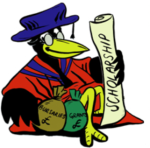
The Alternative Guide to Postgraduate Funding Online is all about alternative sources of funding – charities, foundations and trusts – which can
make awards (fees, maintenance, research costs) to any PG student
regardless of subject, or nationality. The Alternative Guide Online contains a huge database of funding opportunities, comprehensive guidance, and numerous tools to help you prepare a winning grant application. The Graduate School has a subscription to The Alternative Guide to Funding, and you can find out more here. Read on for instructions on how to register and for a webinar recording which will explain how it works.
 UON Graduate School Blog