Blog Archives
My UON Journey and Experience of the Images of Research (IOR) 2025

My educational journey at the University of Northampton (UON) has been a long and fulfilling one. I began with a BA in Business Entrepreneurship and Management, followed by an MSc in International Marketing Strategy. I am now pursuing a PhD focused on the Adoption of Responsible Human-Centred Artificial Intelligence (AI) in UK and Maltese Agriculture. My research explores the perspectives of agricultural professionals on adopting AI technologies and responsible AI practices.
Recently, I entered the Images of Research (IOR) 2025 competition. Although my research is rooted in the social and business aspects of AI adoption in agriculture, translating those concepts into a single, accessible visual image was a unique and creative challenge. The competition brief invited participants to design a distinctive image (whether a painting or photograph) that artistically captured the essence of their research, along with an engaging title and a 150-word summary.
The Graduate School provided clear guidance, including a rules and guidelines document and examples of previous entries. Lina was also incredibly helpful in answering any queries I had throughout the process.
This year’s competition featured 11 submissions and included two awards: the People’s Choice (won by Clare Moss) and the Judges’ Choice, which, to my surprise and delight, was awarded to me. I had entered with no expectations, only a desire to gain experience and learn from the process. I never imagined I would be selected as the judges’ winner.
Creating my IOR image gave me a chance to express my research visually, in a way I hadn’t done before. I used a photograph of a vibrant Maltese pomegranate field as the backdrop, rich in colour and symbolic of tradition and cultivation. The image is split into two halves, like a visual balance scale. On the left stands a traditional Maltese farmer, seated on his tractor with his dog by his side, a warm, human moment that reflects the heritage and hands-on nature of conventional farming. On the right, in contrast, is a more modern Maltese field featuring an AI-powered irrigation device, symbolising the forward-looking potential of smart agriculture.
The image invites the viewer to consider how tradition and innovation can coexist. I aimed to keep the composition simple yet meaningful, ensuring that anyone, regardless of academic background, could grasp the essence of my research at a glance.
To my fellow PGRs: I wholeheartedly encourage you to take part in opportunities like this. Events run by the Graduate School are fantastic for expanding your research visibility, building your confidence, and connecting with others in the PGR community. Even if you don’t win, the experience itself is invaluable. You never know what you’re capable of until you try.
Finally, I would like to express my heartfelt gratitude to my supervisory team: Associate Professor Dr Tatiana Gherman (First Supervisor), Dr James Mshelia (Second Supervisor), and Dr Nadeem Aftab (Director of Studies). Their guidance and encouragement have been instrumental throughout my PhD journey so far.
Blog post by: Henrietta Farrugia
Re-defining, Re-exploring and De-claiming methodological research. Yes, to De-claiming

I’m so happy to have recently won the poster competition at our university’s 18th annual postgraduate researcher poster competition. As a current PhD student focusing on inclusion, particularly in culture, race, gender, and dyslexia (disability), I find this acknowledgement encouraging and energising.
My academic journey began at the University of Northampton (UON), where I earned my Master’s in Special Educational Needs and Inclusion (SENI). It was also at UON that I received support in being identified as dyslexic and subsequently excellent assistance in completing my Master’s. This emotional and challenging experience of being diagnosed late with dyslexia nurtured my passion for exploring this area and questioning why I was not identified earlier. It motivated me to pursue a PhD to explore the awareness of dyslexia in education, particularly concerning culture, race and gender.
When the poster competition was announced, I saw that one of the themes was methodology. I saw it as a fantastic opportunity to showcase my research on how I am exploring the educational experiences of Black African women with dyslexia within the UK educational system in a visual and accessible manner, as there is limited research in this area.
The application process was refreshingly straightforward, requiring only a brief abstract and a few details submitted via a Microsoft form. Designing the poster was enjoyable, although it was challenging to avoid overloading it with excessive information, and using Canva proved helpful. Printing the poster was equally straightforward. I used the recommended printers, Merland, for the printing service, and they were quick to print the poster and incredibly supportive throughout the process. The staff knew UON’s poster competition guidelines and offered guidance on layout, ensuring the final print appeared professional. Although there is a cost to print the poster, the university reimburses it.
I felt excited yet nervous on the day of the competition as I did not know what to expect. However, the atmosphere quickly calmed my nerves. The standards set by the other competitors were remarkably high; they conveyed their research in a manner that showcased their passion for it, and it was wonderful to observe the diverse approaches people took with their research. The judges were approachable and genuinely engaged with the work presented. Their questions were differentiated and engaging and resembled a conversation more than an interview or interrogation, making the experience enjoyable and enlightening. It was a fantastic opportunity to reflect on my work and gain fresh perspectives.
Although winning the competition was a proud moment, it was about taking part, getting exposure, and thinking outside the box for my research, which can sometimes be a lonely journey. I am thankful for the encouragement of my supervisors (Dr. Emel Thomas and Dr. Cristina Devecchi), ASSIST (Katie S), and the support of The Graduate School and the team at Merland.
If you are a student considering entering a poster competition, I highly recommend it. It is a fantastic way to share your work, build confidence, and connect with others passionate about making a difference in whatever field you are in.
Blog post written by: Aina Amure
Deadline extended to May 10 – 18th Annual Postgraduate Researcher Poster Competition
Thursday 15th May 2025 10am-2pm, The Owl’s Nest, Ground Floor,
Learning Hub, Waterside Campus
Rules of entry
· Entry forms must be completed by May 10 2025.
· All posters must be A1 in size and Landscape in orientation and printed on paper.
· Bring your printed poster with you on May 15th at 10am.
· Posters will be displayed on A1 landscape poster boards. Fixings will be provided.
· A4 size versions of the poster may be used as handouts. No other handouts may be used.
· Name, title of poster and the University logo must be clearly presented on the poster.
· You will talk about your poster with judges in a 1-1 chat.
There is a £100 Amazon voucher for the first prize winner plus one runner up of £50.
Judging criteria
Each researcher will present one poster. The poster should be in layperson’s terms, that is, understandable by a member of the general public. Each researcher will be judged on their poster as well as the oral presentation of their research. The judges will be clearly identifiable and will introduce themselves as necessary.
Researchers are permitted to distribute A4 replica copies of their poster. Each researcher will be expected to answer questions about their research and poster from other visitors to the exhibition. Winners will be announced at 1:45pm. It is requested that poster competition entrants arrive at 10am and stay until 2pm.
Please direct any questions to: lina.el-azhab@northampton.ac.uk
Training session for participants available: link here.
The PhD Process: Five years of banging on about the same thing
I initially became a student at the university way back in 2014, starting my BA in Media Production and Creative Writing; before then, I had held the belief that I had zero academic potential. Three years later, I had a First-Class degree and was pleased to have been proven wrong. It goes without saying that the first obvious step was continuing my education through a Masters, which I did, gaining an MA in Contemporary Literature at a Merit. I was burnt out at that stage. I knew I needed to take some time out from academia. So, I focused on my marketing career, developing and learning more about that.
Then Covid. It seems weird that the thing that put me back onto the research path was such a massive event; it impacted so many people in so many ways. For some, this impact was a heartbreaking loss or the struggle between distance and isolation. For me, I was made redundant – there was no need to market when the market was shut.
But redundancy was the catalyst. After some encouragement from my husband, I started drafting my research proposal. I already knew what topic I wanted to explore, so expanding that was easy…almost. It had been over two years since I had read critically and deliberately. But it was like slipping on an old, favourite jumper. In October 2020, I started my PhD.
I was unprepared for the next handful of years; I had committed to a part-time course, which meant 6 years. Tens of thousands of words in 6 years sounds straightforward at the start. In practice? Not so straightforward. But I was persistent – taking on the familiar adage which was repeated to me by every PhDer and numerous staff members – “it’s a marathon not a sprint”. Some years were more productive than others, it took me the whole of 2021 to get my literature review drafted, but in 2024 I drafted two of my analytical chapters. 2025 is off to a slow start, with me putting it on the back burn as work and personal situations took up more of my time. But I am looking at the finish line. It’s a year or so in front of me but within touching distance.
I was told that if I didn’t hate my subject by the end, I was doing the PhD wrong. This is meant to comfort people who have lost that passion. Spending half a decade with one topic is exhausting, particularly when the project’s scope has changed from what you initially plotted out.
My friends, I am pleased to say I am doing it wrong. I am still as fascinated by my subject as I was 5 years ago. But I am incredibly fortunate to have the time to do this, albeit squeezing it in the evenings and weekends or my lunch breaks if I have a deadline looming. My key lesson from nearly 5 years as a PhD student is that 5 years is not at all as long as I thought. I was the one who first thought about the project, shaped it, grew with it, changed
it, and I will be the one to complete it. I want to enjoy it. So, I have done everything I can to make this thesis the thing I still get excited about after all this time. I make pretty notes. I reward myself with lil treats when I finish a chapter draft, or do well in a supervisor meeting. But mostly, I don’t punish myself if I lag behind slightly or need more revisions – and yes this is what I am passionate about and I want to do well with. But we cannot be at 100%, 100% of the time.
So to anyone starting a PhD, or in the middle of one, or head-in-hand-just-had-enough of this thesis. Just take a breath and remember: it’s your project. You’re doing it!
Blog post written by: Bethany McTrustery
Claire’s Adventures in PhDland
It took me two years to get to my actual research question and to feel like I knew what I was trying to investigate. There were the obvious things of life – work, family, health, money – but I felt like I was wading in academic treacle to get anywhere. I went down what felt like thousands of rabbit holes, trying out different perspectives around my theme, and created a plethora of conceptual models (once I had figured out what one was). I read. A LOT. It felt very tangled and messy and, looking back on it, I needed all that time to get my head around what I was actually doing.

As I was working out what I was actually looking at, I talked to many many people. My supervisors, of course, held me accountable in academic terms to the level and quality of PhD research, even if they haven’t necessarily understood exactly what I was exploring at the time. My family often look at me as if I have finally lost it, particularly when I get excited about a bit of analysis that gives an interesting insight, but they also ask questions which make me think from a different perspective and bring me coffee too! My industry network is a fantastic sounding board, making sure that my research is grounded in practice and generating insight that is applicable and impactful for the events industry.
At various points through the process, new collaborators have emerged, offering opportunities to explore new areas or engage industry in my research in a different way. These have been, and are, incredibly exciting and perhaps a little distracting. It has led to me being part of a national network and now leading on their industry research activities, and I am part of a team developing AI-driven experiential learning to apply the findings of my research. However, all of this has taken a lot of time and energy and, at times, has torn me away from focusing on my research and prioritising it.
There is something wonderful about people being interested in one’s research and creating something that has value and impact on the industry that I love being part of. Inadvertently, I seem to have built a new reputation and profile for myself that is based on my brain and insights, less so on my event management skills and capabilities. Not having yet completed my PhD, I feel somewhat an imposter but I am taking a moment in this blog to realise how far I have come from those first months of nervous excitement and confusion as I started, through developing my question, to collecting data and now to analysis and writing up.
I know I still have a long way to go to complete my PhD but I know how I’m going to get there, which is more than I started with! To anyone else who feels a bit lost and overwhelmed with it, hang on in there, get support, lean on your support network, stay curious and focus on the goal whether it’s hourly, daily, weekly, monthly, yearly or in a lifetime.
Blog post written by: Claire Drakeley
Graduate School Update Day 2024 – Research Culture and Community at UON
Our Graduate School Update Day will run on Tuesday 4th June from 9:30-3:30pm. This annual event is for postgraduate researchers and their supervisors to come together to discuss topics of interest. This year we will be discussing the importance of developing and maintaining a strong research culture and community at UON – in supervision, in PGR development and in our research degree support across the university. Dr Neil Radford from the University of Derby is joining us for these discussions – Neil is the external examiner for UON’s Supervisor Development Programme.
The day will also include a session on research degree policy changes, an introduction to Images of Research 2024, which will be open for voting, and an overview of the upcoming Annual Research Conference later in June.
Lunch vouchers will be available for a free lunch for all attendees. You can attend for all or just part of the day. Please see the schedule below for full information and go to Gateway for booking your place.
EMDoc PGR Conference 2024: Call for abstracts from PGRs

The call for abstracts is open for the 2024 EMDoc PGR conference. If you are studying for a doctorate at UON you are eligible to apply. EMDoc consists of nine Midlands universities who are keen to work collaboratively to share best practice, resources and insights into doctoral research across all disciplines. The EMDoc Conference is a great opportunity for PGRs to discuss and promote their research as well as network with other researchers from across the East Midlands.
This year’s conference will be hosted online by the University of Nottingham and Nottingham Trent University, and will take place online on 25th September 2024. UON PGRs are invited to submit abstracts for the conference (submission deadline Monday 10th June).
The theme for the 2024 EMDoc conference is ‘Collaborations, Connections and Positive Change: Imagining Possible Futures Through Research’. This event seeks to support cross-disciplinary
and cross-institutional dialogue and collaboration, inviting contributions from PGRs working across subject areas.
Come along to the 2024 Postgraduate Researcher Poster Competition!

The Graduate School would like to invite you to their 17th Annual Postgraduate Researcher Poster Competition on Thursday 23rd May 2024, 11am to 2pm, in the Owl’s Nest on the ground floor of the Learning Hub, Waterside campus. The poster competition is a development opportunity for doctoral research students, who present their research on a research poster, giving short 1-1 verbal presentations alongside. Come along to meet some of our PGRs and learn about their research!
Read the rest of this entry
UON Research Conference 2024 – call for submissions deadline extended to 13th May!

The call for submissions for our Annual Research Conference is open to all researchers at UON, so whether you are a PGR student, an early career or more experienced researcher you can apply to present your research on Tuesday 25th June (on campus) and/or on Wednesday 26th June (online). You have the choice of a 15 min oral presentation, chairing a round table discussion, facilitating a workshop, presenting a 20/20 Pecha Kucha (20 slides, each for 20 secs!), designing a research poster/infographic for an online collection or submitting an artefact/object for a ‘touch the exhibits’ display on campus. You can enter as many of these categories as you would like. The call closes at midnight on 13th May. To enter read on…..
Read the rest of this entryDr.App: NEW video support for postgraduate researchers & their supervisors
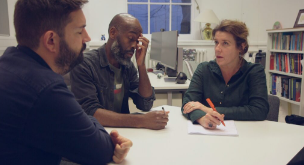
The Graduate School has purchased licences for Dr.App., designed for PGRs and staff supervising research degrees. Dr.App is an online video resource covering everything from working with supervisors and preparing for the viva examination to coping with stress and mental health challenges, from research impact to presentation and networking skills. It has content PGRs should find helpful at every stage of a research degree, in any discipline. For supervisors there are a number of videos on good, supportive supervision. More than 8 hours of videos are organised into topics for easy reference and are developed in association with academic consultant Prof John Wakeford of The Missenden Centre. To access the resource follow the information in the flyer attached below.
Read the rest of this entry
