Category Archives: Faculty of Arts, Science and Technology

Dr Ali Al-Sherbaz appearing on the BBC, The One Show
Our Research team from the Computing Department and Moulton College are developing a sensor to detect lameness in sheep. Associate Professor Dr. Ali Al-Sherbaz will be appearing on the BBC One – The One Show tonight at 7pm. Tune in to find out more about this research, how this infection costs UK farming about £80m/yr and whether the solution could lie in a ‘Fitbit’ for sheep.
New Yammer Research Support Group
All staff have access to Yammer… Kind of like facebook for work… In order to give Researcher’s at our University a dedicated space for interaction, helpful files, presentations, links etc, a Research Support group has been created, including information on the REF and RDM. Feel free to join & access these resources! (https://www.yammer.com (log in with your Uni username and password)).
Article Processing Charges – Update
The University of Northampton has an institutional fund for the payment of article processing charges.
Publishing “gold” allows your research, the published version, to be made freely available immediately upon publication to anyone with internet access. This enables people to access your work without waiting for embargo periods to pass (which can be up to 5 years or more!) and for the published version to be made freely available, rather than your accepted manuscript!
The University has entered into a number of agreements that allow us discounts on the cost of article processing charges:
- IEEE (25% discount – prepaid account)
- Springer (All APCs at zero cost – please select the open access option)
- SAGE (£200 Discount)
- Taylor and Francis (75% discount on most journals)
- Wylie (25% Discount)
When publishing with any of the above publishers, please contact openaccess@northampton.ac.uk and we will guide you through the process.
If you have any questions in relation to article processing charges, copyright or the quality of a journal, please do contact openaccess@northampton.ac.uk prior to signing a copyright transfer agreement.
“One Health: linking humans, animals and landscape, a case study from Ethiopia” – Research Seminar – Prof. Nikolaus J. Kuhn
Come along to Newton Building (room NW205) at 12:00 on Wednesday 7th June for a research seminar by Prof Nikolaus J Kuhn.
The One Health approach originally linked human to animal health. Moving from prevention of transmission of diseases between humans and animals, the scope widened to improving human health through that provided food of sufficient quality to avoid malnutrition and disease. This approach can reduce health costs significantly in rural areas developing countries, including rangelands. Recognizing land degradation as a major cause of poor animal health, the inclusion of rangeland ecology was a logical expansion of the One Health approach. In this presentation, the concept of One Health is presented, in particular with regards to dryland pastoralism. The recently started Jijiga One Health Initiative (JOHI) in south-eastern Ethiopia is used as a case study to illustrate the contribution of One Health to sustainable land use and the improvement of health and livelihoods of the rural population.
Short biography:
Nikolaus J. Kuhn got his first degree in Physical Geography (1990-1995) in his native country Germany from the University of Trier, completing a thesis on Holocene climate change and dryland lake hydrology in NE-Spain. Winning the Government of Canada Award to undertake PhD research, he moved to the University of Toronto in 1996. There he completed a PhD in Geography (1996-2000), studying the effects of varying weather patterns on soil erosion in Canada and Mexico. The PhD was followed by postdoctoral research in Israel (2001) on the role of rainfall-surface interaction for landscape development in the northern Negev. In 2002, he started academic teaching as Visiting Assistant Professor at Clark University, Worcester, Massachusetts. He joined the University of Exeter as Lecturer for Geography in July 2003. In 2007, he was appointed Honorary Professor at the University of Exeter.
The research interests of Nikolaus Kuhn and his group focus on the physical geographic dimension of environmental change, in particular the interaction of surface processes and climate on geomorphology and associated biogeochemical cycles. Their key aim is to identify the functioning of landscape systems, their spatial extent, reaction to change and mutual effects on each other. Current major projects include the reconstruction of Carbon and nutrient cycles in rangelands, the role of agricultural dust emissions on climate and health in southern Africa, the ecological impact of the land reform on communal land in Namibia, and a grant by the Swiss Space Center supporting the search for life on Mars.
All welcome!
Impact & the REF – Introductory Session
Thank you to all who attended the sessions today on Impact & the REF. If you were unable to attend today’s sessions, please take the time to have a look over the slides. If you haven’t yet booked for the 3 hour workshop session relevant to your unit of assessment please do as soon as possible (email SDbookings@northampton.ac.uk).
Impact and the REF Standard Sized Screen
If you have any questions please email dawn.hibbert@northampton.ac.uk
Note: Recommendations from Lord Sterns Review in the REF: (Final guidelines to be published in Summer 2017)
- Impact – Proposal for impact in REF 2021 is to remain consistent with REF 2014 process
- Impacts are submitted by the institution or institutions in which the underpinning research has been conducted.
- Impacts are submitted by the institution or institutions in which the underpinning research has been conducted.
- Aspects captured by the impact template should be incorporated into the environment statement.
- Propose to take account of the unit’s approach to supporting and enabling impact as an explicit section of the environment element of assessment – impact template would no longer be required.
- 100% of the impact sub-profile would be attributed to the impact case studies.
- Case study ratio should be based on HESA data on research active staff.
- All institutions should be required to submit some institutional-level case studies which arise from multi- and interdisciplinary and collaborative work.
- Proposed that case studies are submitted via a web form in REF 2021 that will include a number of mandatory fields.
- Case studies should continue to be based on research of demonstrable quality, but could be linked to a research activity and a body or work as well as to specific research outputs.
- Proposed that examples of impact in REF 2021 must be underpinned by excellent research, research activity, or a body of work produced by the submitting unit in the period from 1 January 2000 to 31 December 2020.
Butterflies and other animals: Tom Brereton inaugural professorial lecture
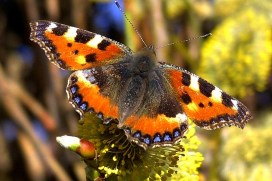
Kleiner Fuchs (Nymphalis urticae)
CC BY-SA 3.0
John Sinclair, The Dean of the Faculty of Arts, Science & Technology has pleasure in inviting you to the Inaugural Professorial Lecture entitled
Butterflies and other animals:
40 years of adventure in ecology and conservation
The lecture will be delivered by Professor Tom Brereton, on Tuesday 16 May 2017 at 6 pm in The Grand Hall, Newton Building, St George’s Avenue, Northampton, NN2 6JD
Coffee & biscuits will be served on arrival at 5.30 pm. Following the lecture there will be an opportunity for networking and discussion over drinks & nibbles. For catering purposes, please advise Val Howe if you are able to attend.

Impact & the REF
“In the 2021 REF the University of Northampton will submit and celebrate the excellent research it has done, and is doing, to underpin the delivery of the Changemaker Challenges and the University’s mission of Transforming Lives + Inspiring Change. The interdisciplinary nature of much of our research will be made overt. We will particularly focus on the impact our research has had, locally, nationally and internationally, and the ways the implementation of research findings (the application of our new knowledge) has improved the lives of people, and their environments.” Professor Simon Denny (Executive Dean: Research, Impact and Enterprise).
The Research Excellence Framework (REF) is the system used for assessing the quality of research in UK higher education institutions. In order to facilitate preparation for the next REF, two meetings have been scheduled for all staff on the 19th of May.
12 pm to 1 pm – Park Campus – DLT (Delapre Lecture Theatre)
2 pm to 3 pm – Avenue Campus – MR 5
Further meetings have been scheduled to look deeper at impact and case studies for units of assessment for the next REF. These are 3 hour meetings which will look in detail at what makes a 4 star impact case study and how we can apply that to our own research.
Please ensure that you come along to the meeting that is relevant to you, if you are unsure of which meeting to attend please contact your Research Leader.
24th May – 09:30 am to 12:30 pm – Mechanical Engineering, Art and Design, Geography, Computing – Avenue Campus – MY120
7th June – 1 pm to 4 pm Allied Health & Psychology – Park Campus – C317
9th June – 9:30 am to 12:30 pm – English and History – Park Campus – C317
9th June – 1 pm to 4 pm – Education, Business and Law – Park Campus – C317
Note – these are based on units of assessment, not faculty structures.
Please do prioritise these dates, and attend if at all possible.
Please email SDBookings@northampton.ac.uk to book your place.
If you are a PG Student, please contact dawn.hibbert@ed.ac.uk for booking.

University’s Enterprise Priorities 2017-2020
The aim of the University’s Enterprise Plan for 2017-2020 is to deploy existing and new, resources in coordinated partnership with key local stakeholders to improve the economic metrics and business environment of Northamptonshire. In achieving this aim the plan will also improve graduate employability, wellbeing, environmental and other metrics.
The University’s Enterprise Priorities 2017-2020 document has been written by Professor Simon Denny, Executive Dean for Research, Impact and Enterprise. Find out more about these Priorities by reading the full document UoN Enterprise Priorities 2017 – 2020
 UON Graduate School Blog