Category Archives: Funding
Impact – REF
The Research Excellence Framework was the first exercise to assess the impact of research outside of academia. Impact was defined as ‘an effect on, change or benefit to the economy, society, culture, public policy or services, health, the environment or quality of life, beyond academia’. HEFCE
Measuring the impact that our research has on society and cultures, and being able to demonstrate this impact, has implications for future funding.
Fast track have studied the most succesful case studies from the previous REF, and published their findings in an article entitled: 10 lessons from grant proposals that led to the most significant and far-reaching impacts.
Very much worth a read for those who are looking to submit to the next REF.

Post Award: Essentials of Project Management
Do you wish to learn more on Project Management?
Whether you are leading a project or acting as a partner, this short workshop will provide an understanding of Project Management processes to enable you to deliver a successful project. Facilitated by Paul Bramble, Project Officer for the Research and Strategic Bidding Office.
This workshop will take place on Monday, 6th March from 2-4pm in Room SOO8, Sulgrave Building, Park Campus. To book a place, please click on the Eventbrite link below.
https://www.eventbrite.co.uk/e/post-award-essentials-of-project-management-tickets-31962630087
Upcoming workshop: Developing a research track record on a shoestring
 On February 8th 2017 we are welcoming back researcher & educator, Hugh Kearns, who will be running a workshop for academic staff and researchers “Developing a research track record on a shoestring”. Hugh is recognised internationally and regularly lectures at universities across the world, including Oxford, Harvard, Stanford and, now for the fourth time, Northampton.
Academics and researchers are constantly being told to increase their research outputs if they want to get promoted or funded, but it becomes a catch 22 when you can’t do much research because you have no money, but no one will give you money because you haven’t done enough research. Despite this situation there are ways to build a research track record that require less money and can give you the start you need to build a decent track record (or even just to keep your head above water!). Read the rest of this entry

University Open Access Fund
 FAQ: Does the University have any funds available to pay publishers’ article processing charges (APCs) and if so, how can I apply for these?
As of August 1st 2016 the University of Northampton has set aside an Open Access (OA) fund to support the payment of article processing charges (APCs).
APCs are the charges levied by publishers to cover the cost of making an individual article OA at the point of publication (aka ‘gold’ OA). This may be in a fully OA journal or in a ‘hybrid’ journal which makes otherwise subscription only articles available OA on payment of an APC.

Research Councils UK announcement: the future of J-eS
If you’ve ever applied to a Research Council for funding, you’ll be familiar with J-eS, RCUK’s joint submission system. However we’ve recently been informed that things will be changing from next year.
The Je-S system has come to a natural end, and in the words of RCUK:
‘This is a fantastic opportunity to design a smarter, simpler more user friendly service in line with the latest digital standards. Work is already underway to design the new awards service. This work is based on extensive user research to ensure that when the changes come into effect you will find they better meet your needs.
So what sort of improvements can you expect?
As an applicant, peer reviewer, research manager or administrator you will no longer use the Je-S system to apply for grants, submit reviews or manage your research organisations grants activities. There will be an entirely new external portal. In future the whole grant application form will be digitised which means in the majority of cases no more uploading of attachments. And there are other improvements such as in built formatting for font size and word count, improved dashboards to help you manage your grant activities as well as guidance relevant to a particular funding opportunity close at hand all on the one screen while you are applying’
We can expect to see the new system being piloted in March 2017, parallel running of both systems from May 2017 and the new system being used for all submissions and reporting by early 2018.
The RSB office will be able to pass on more information about the new system once we’ve seen it demonstrated in June, but if you are planning to submit a new RCUK application from may 2017 onwards, you probably won’t be using J-eS. Watch this space, and don’t forget the RSB team can help with applying to the Research Councils for funding, as well as anyone else you might be thinking of so do get in touch if you need support with an application.

‘The betterment of society’ – Cumberland Lodge Scholarships available
 A fantastic opportunity is available for PhD students to apply for a Cumberland Lodge Scholarship. The scholarships are aimed at scholars who are able to demonstrate a commitment to working for ‘the betterment of society’ through their academic research and/or other activities. The charity is currently focused on its work around ethical challenges in health, policing and social cohesion, but applications are welcome from any academic discipline. Read the rest of this entry
PhD Studentship: Transforming Lives, Inspiring Change: Investigating the social impact of university access strategies and approaches
Pay & Expenses: £15000 p.a. (including £1000 research expenses) and tuition fees for 3 years. Please note, the award covers tuition fees at the UK/EU rate only; those not eligible to pay UK/EU tuition fees must demonstrate that they can fund the difference.
Overview: The social mobility in Higher Education agenda recognises that widening access to University by extending opportunities to gain a place of study is not enough. It is also essential to investigate what happens to students once they embark upon a course, the support they receive, the experiences they undergo and the journey they take through different stages of the learning lifecycle. These phases form the platform upon which activities and learning opportunities can be effectively evaluated, innovation can be facilitated and targeted activities can be developed to address identified priority areas. Read the rest of this entry

Working with industry – funding opportunities seminar
Submitted by Dr Terry Tudor
You are invited to a seminar on funding opportunities on Thursday March 17, from 1 to 3pm, in Newton Hall. ** Updated venue
The seminar will briefly review the advantages for university staff and students of working with industry, and explore ways to make a start, or deepen your links with businesses. There will be an opportunity to look at the financial support available from government and other sources (including European funding) to support collaborations. It will also review the characteristics of a good collaborative funding bid.
Funding opportunity: AHRC Collaborative Doctoral Partnerships
 The British Library is currently advertising three Collaborative Doctoral Partnerships, to begin in October 2016. The call is open to researchers of postdoctoral standing with a contract of employment with a UK HEI.
There are three research topics:
- The Working Life of Scientists: Exploring the Culture of Scientific Research
- Digital Publishing and the Reader
- Hans Sloane’s Books: Evaluating an Enlightenment Library
Further details and the application form are available from the British Library website.
Finding sources of funding for your postgraduate degree study.
 Are you a postgraduate student (PhD, Professional Doctorate, Mphil or Masters student) at the University of Northampton who is self-funded? Would you like a chance to win funding for fees, maintenance, travel, conference attendance and other research expenses? If so, you might be interested in the next few paragraphs!
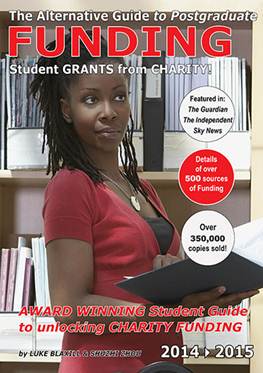 Lucy Atkinson’s new workshop “Finding Alternative Sources of Funding” ran on Wednesday 24 June – Lucy has been very successful in obtaining funding for her self-funded PhD and in the workshop she shared her ideas for gaining funding from a variety of sources but, particularly, a major, but neglected, alternative funding source in the area of charities and external bodies. Read the rest of this entry
 UON Graduate School Blog