
Careers sessions for researchers: self-employment
The Graduate School are offering a couple of brand new workshops on self-employment for researchers and the first is coming up next Tuesday 1st December.
Dr Hiten Vyas, Business Adviser at the Enterprise Club will be running Self-Employment: Is it for you? in the TPod, Rockingham Library from 12-2pm, with lunch after. To book please see the Eventbrite page. This workshop has a follow-up session on January 11th 2016 Self-employment – Business Planning. If you are interested in taking the idea of self-employment further then do book both workshops. Read the rest of this entry
The future of printed academic books
 If you haven’t previously read ‘The Conversation‘ then let me introduce you to this excellent blog with this post on the future of academic print books.
Written by Donald Barclay, Deputy University Librarian at the University of California Merced, the article highlights the impact of falling budgets and rising prices on academic book sales and proposes the open access monograph as a viable alternative. But first, he argues, academic distrust of digital publication has to be overcome…

Discipline-related research skills from the School of Health: open to all
 The School of Health have recently launched their discipline-related development programme, which includes a range of workshops and seminars on a variety of themes, open to all PGRs at the University of Northampton. This development programme has been designed to support researchers – and those supporting research – in subjects which relate, broadly, to Health and Social Care. The sessions detailed are available to research students (PhD and Professional Doctorate) within the School of Health and from across the University. Staff from the School and further afield are also welcome. Workshops coming up include public involvement, academic writing and research impact. Read the rest of this entry
Countryside and Community Research Institute (CCRI) Winter School; Call for papers from postgraduate students

The Countryside and Community Research Institute (CCRI) Winter School, which will be taking place on 13/14th January 2016 at Park Campus, University of Gloucestershire, Cheltenham, has invited papers from postgraduate students.
The CCRI Winter School provides a friendly and supportive environment for postgraduates, across geography, rural studies and environmental management themes, to present their doctoral work and receive feedback from CCRI staff and PGR students. More information about the CCRI and past Winter School events can be found on their website.
Any postgraduate student interested in participating should send a paper title and short abstract of around 200 words to maffleck@glos.ac.uk by 30th November 2015.

December IoHW lunchtime seminar
Submitted by Ruth Hughes-Rowlands.
Two examples of involving people with experience of mental illness in research is the December lunchtime seminar from the Institute of Health and Wellbeing – read on for details.
Engineering seminar:
Submitted by Professor Stefan Kaczmarczyk
Title: The influence of probe fill factor during boiler tube inspection using electro-magnetic non-destructive testing
Speaker: Dr Jonhson Angelo, Federal University of ABC, Brazil/ Visiting Research Fellow at the University of Northampton
Date: Monday 23rd November 2015
Time: 13:00 – 14:00
Venue: NW101, Avenue Campus
The aim of this talk is to show the importance and influence of the probe fill factor during inspection of boiler tubes when using electromagnetic non-destructive testing techniques. This is demonstrated by the results of finite element (FE) modelling and simulation test.
Hugh Kearns returns with good feedback! A workshop for supervisors.
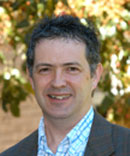 On March 11th 2016 we are welcoming back researcher & educator, Hugh Kearns. Hugh is recognised internationally and regularly lectures at universities across the world, including Oxford, Harvard, Stanford and, now for the third time, Northampton.
Hugh is running two workshops, one for supervisors on Giving Good Feedback, focusing on giving positive feedback, providing criticism without crushing the recipient, varying the type of feedback depending on the student’s stage, what to do when your student doesn’t listen… and more. Read the rest of this entry
Grounded Theory Forum dates 2015/6
Submitted by Dr Sarah Neill
Details of this year’s GT Forum meetings are as follows:
| Date: | Time: | Room: |
| Wednesday 20th January 2016 | 1:00 to 3:00pm | S010 |
| Wednesday 16th March 2016 | 1:00 to 3:00pm | C318 |
| Wednesday 29th June 2016 | 1:00 to 3:00pm | K205 |

Transfer seminar: Networks of protest – the role of new social media in the Arab Spring uprising
 Submitted by Dr Faith Tucker
14th December, 2.00-3.00pm, S010
Title: Networks of Protest: The Role of New Social Media in the Arab Spring Uprising.
Abstract: In context of the Arab Spring uprising of 2010-2011, the Internet and its methods of social media have been heralded as instrumental in supporting the uprising. This research will observe closely at the situation to which activists applied “Networks of Protest” like Twitter, Facebook, YouTube and weblogs as methods for managing and making consciousness of political mobilisation, in the uprisings that took positions in different Arab countries, in particular, Egypt, Tunisia, and Libya. This research will use network theories that were established long earlier the appearance of social media, to place its performance within a broader level of communication, and to define how the natural characteristics of social networking theories that established it interesting to the activists in Egypt, Tunisia, and Libya.
 UON Graduate School Blog