English language workshops coming up.
If you are a research student for whom English is not your first language, you may be interested in some workshops which are taking place on 11th, 18th and 25th November. Helping to improve your language skills, the workshops are open to PGRs from all Schools. More details can be found in the flier below. Contact Susie Cowley-Haselden for more information. Read the rest of this entry

Deadline extended for Images of Research 2015-16 – there is still time to enter!
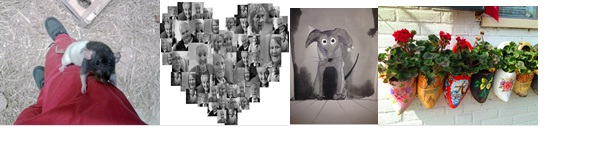
Images from the 2014-15 competition
If you haven’t yet had time to take a photo or draw a picture reflecting your research there is still time. The deadline for the Graduate School’s Images of Research competition has been extended to a final deadline of 5pm on 24th November 2015. Just grab your camera or pencil/paintbrush and produce a unique image which captures the essence of your research, or an element of your research, in a visual, artistic or photographic way. Add a snappy title and 150 word summary and that is all you need to do to participate.
IoR will, again, be a competition, where viewers can vote for their top three favourites. Entries for IoR 2015-16 must be emailed to Simone by November 24th 2015. Read on for the rules…

Workshop on public involvement in health and social care
Submitted by Dr Michelle Pyer
A workshop on effective public involvement, organised by the School of Health, is to be opened out to all research students and early career researchers. The session is running on Wednesday December 2nd from 2-4 in PY101 and aims to provide an introduction to the principles, concepts and methods for effective public involvement (PI), participation and engagement. The workshop is to be facilitated by Paula Wray, Public Involvement Programme Lead for the National Institute of Health Research Collaboration for Leadership in Applied Health Research and Care East Midlands (NIHR CLAHRC EM). Read the rest of this entry

MOOCS and other skills development resources online for research students
 Where do you go when you want to learn a new skill or improve your competency? Sign up to a practical, hands-on workshop? Or look online?
Whilst there is no substitute for attending a good skills development workshop, face-to-face learning is not always possible for a whole host of reasons – accessibility, time, family commitments. We all know how good YouTube is for learning ‘ordinary stuff’ but, increasingly, postgraduate students can find some valuable skills development resources online, such as via MOOCs (Massive Open Online Courses). Why not check out some of these resources below? Read the rest of this entry
Catching the Living Naming the Dead: DNA in Forensic Science – Thursday 26th November 2015
 You are invited to a guest lecture delivered by Professor Mark Jobling on Thursday 26 November at 5.15pm in Sunley Conference Centre. Professor Mark Jobling, Professor of Genetics in the University of Leicester’s Department of Genetics is passionate about communicating science to the public and has recently spoken out against the business of genetic ancestry. Mark has spent his career working in the area of human evolutionary biology where he focuses on the genetics of the sex chromosomes. This has led him to explore diverse topics such as the genetic legacy of Genghis Khan, whether we can confidently predict surnames from Y-DNA forensic profiles (focusing on Viking migrations), the impact of Diasporas on the making of Britain and the possible role of Y chromosome gene variants that increase risk for coronary artery disease. Read the rest of this entry
A fond look back at my research life at the University of Northampton
By Dr Nadia Anwar
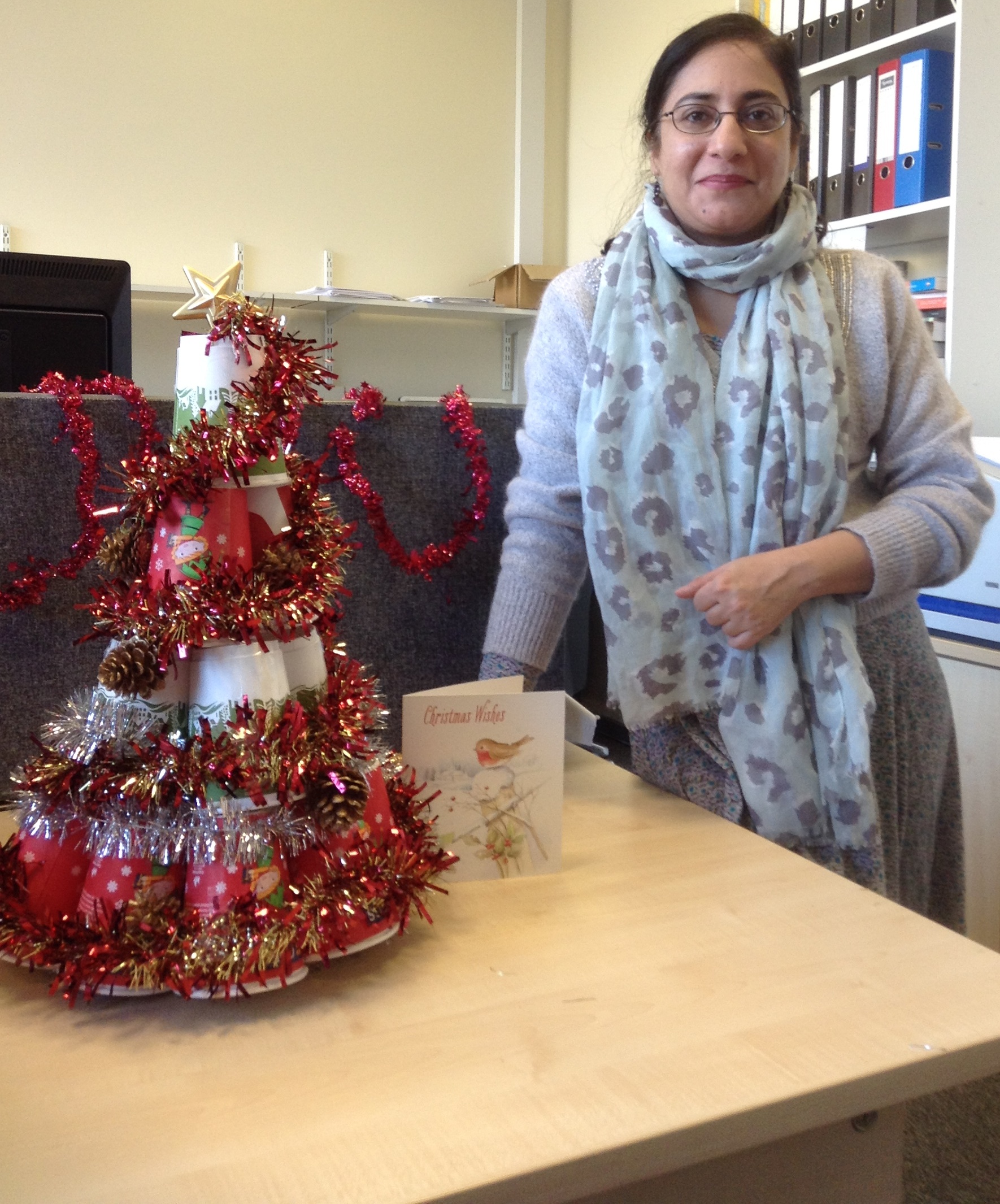
Nadia in the SOTA research office
Now that my academic life at the University of Northampton has come to a close, I take this opportunity to reflect on and share my experiences as a research student. In July 2012 the decision to leave my former university and move to the University of Northampton was not an easy one to say the least, especially when as an international student I was required to pass through the rigors of applying for a new study visa and starting my research process afresh. But my first two experiences at Northampton helped overcome my initial apprehensions and concerns to a great deal. The first was my preliminary meeting with Prof Janet Wilson, Dr Victor Ukaegbu, and Dr Jumai Ewu, my potential Director of Studies and supervisors who ensured me of the potential of my research and showed profound insight and knowledge into the field of my study. The second was the highly professional manner in which my move was handled by both the administrative staff and visa department of the UoN.
From the very beginning of my academic journey in Northampton, I realised that I was at the right place and in the right hands to receive the kind of guidance I had come to the UK for. Read the rest of this entry
Women in Research Network – new blog and Facebook group
You talk, we’ll listen: recruiting for new advisory panel
A message to research students from Library and Learning Services:
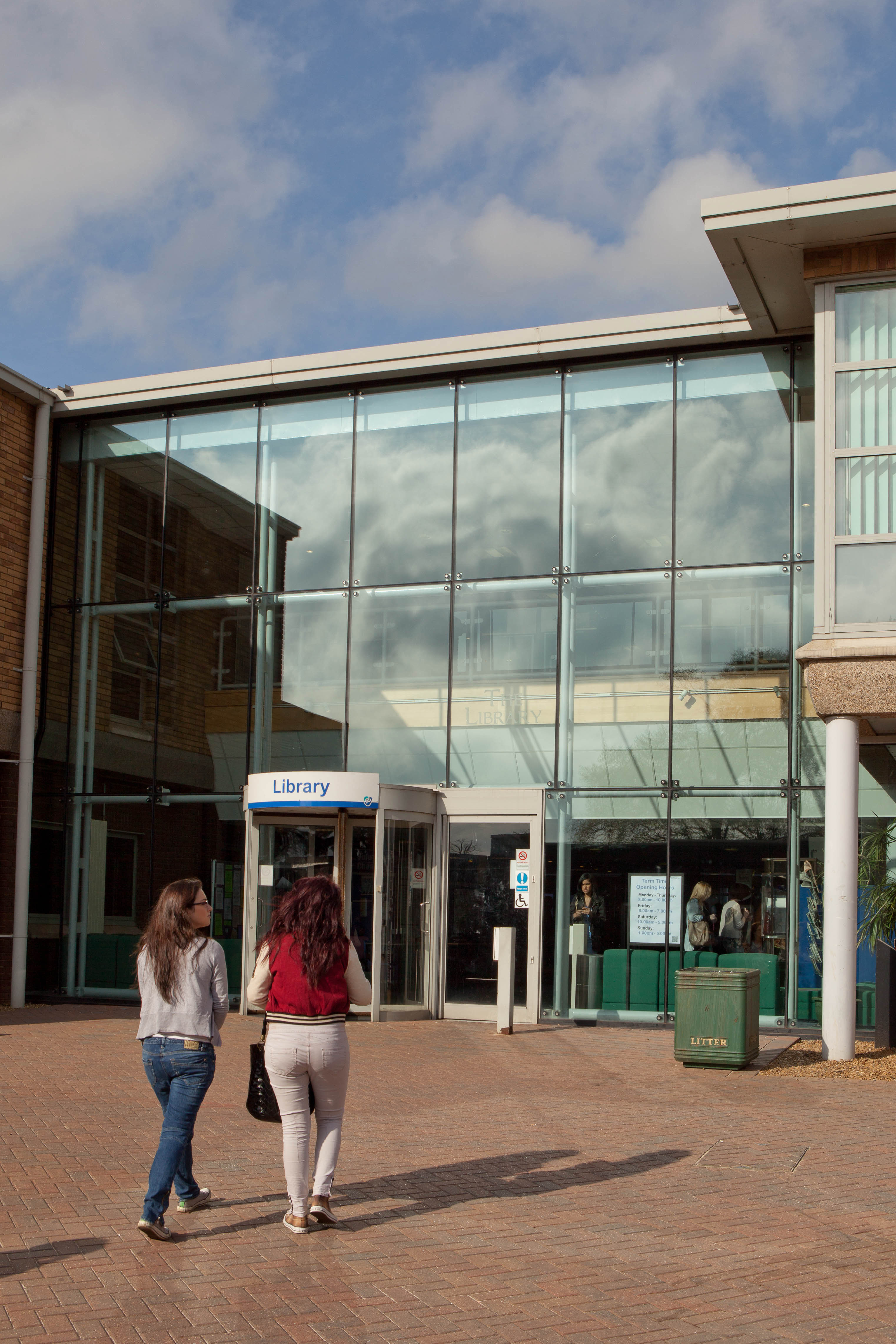 “As part of our commitment to meeting the real needs of students we want to recruit Advisors to sit on a new LLS Advisory Panel, where you will help to shape the services, resources, environments and future of LLS.
Commitment would be mainly via a NILE forum, where we would ask for comments on a wide range of issues, but we will also hold occasional, informal Panel lunches.
No special qualifications are needed and you will not be representing anyone’s views but your own. All we ask is that you are interested in shaping how we support your studies and are committed to joining in the discussion.
So if you would like to make a difference and enhance your CV at the same time, please give your name and email address to a library helpdesk or send your details to chris.powis@northampton.ac.uk.”
Workshop: Conceptual and Methodological Issues in Sustainability Research
Submitted by Dr Sandy MacDonald
The above workshop will be held in room C226 on 18th November from 2 to 4pm.
About the speaker:
Dr Mohamed Saeudy is lecturer in Accounting and Finance at School of Management and Business, Aberystwyth University. Dr Saeudy is a qualitative researcher in Social and Environmental Accounting. His research interest centres on how financial and accounting practices may help business institutions to be more sustainable. His work has focused on developing organisational lenses to understand accounting for sustainable development practices in different organisational settings e.g. small and medium size businesses and higher education institutions. His current work explores the accounting for sustainable development practices in the banking sector. Furthermore, his research interests focus around the main impediments and motivations of organisational sustainability. Dr Saeudy has spent many years working in the banking industry in Egypt and UK. He had also held a research and teaching commitments in accounting and finance at the University of Derby. He also led and taught the Green Accounting and Sustainability Modules at Keele University covering the topics ranging from accountability processes to sustainable business strategies and policies.
If you wish to attend please let Debbie Christopher know.

OA and the research lifecycle 7: disseminating your research
 In deciding whether and how to provide open access to your published work you need to consider:
- The nature of the research output
- Your funder’s open access policy
- The availability of funds to pay article processing charges (if necessary)
- Your publisher’s open access policy
- The availability of an open access subject or institutional repository

