Blog Archives
Predatory Journals
The problem
Hundreds of new open access journals are being set up by reputable publishers, scholarly societies and universities each year. Unfortunately, alongside these reputable journals, an increasing number of pay-to-publish “vanity” journals continue to appear. Such journals are referred to as ‘predatory’ or ‘bogus’ journals. Some academic authors are being scammed into submitting their research outputs to be published in these journals that do not have proper quality control or peer review processes.
The risks
- No proper peer review is carried out to preserve the quality of the research output.
- Damage to the reputation of the researcher and institution.
- Researchers and institutions lend their reputation to a disreputable publication.
- Negative impact on the REF submission if the publication is not detected.
- Your article will most likely not be able to be published elsewhere.
- Copyright would likely be retained by the publisher.
How to check for predatory journals?
Think Check Submit – Provides a checklist of questions that can be used to identify trusted journals.
Look out for the following warning signs:
- Board of Editors list shows that members are not recognised in their field or that they are affiliated with questionable institutions; however, this should be done with caution, as Board member names may be used without their permission.
- Journals with dubious or non-existent addresses for their registered office.
- Unsolicited email or paper communication inviting publication in journals you don’t know or have never heard of.
- Unsolicited invitations to conferences run by event managers, not professionals in the research area, often at attractive destinations.
- Note – Legitimate new journals acknowledge if they are newly created and do not yet have an impact factor.
Further steps to undertake:
- Consult the Directory of Open Access Journals for reputable journals (doaj.org)
- Check the publisher’s membership of Open Access Scholarly Publishers Association (oaspa.org), Committee on Publication Ethics (www.publicationethics.org), and International Association of Scientific, Technical & Medical Publishers (www.stm-assoc.org).
- Reputable journals typically will be listed in the Journal Citation Report.
- Resist the temptation to publish quickly and easily in any journal. Be aware of the publication landscape in your research area and the most reputable journals (check with your research leader if unsure).
- Jeffrey Beall (librarian at the University of Colorado Denver) has also created lists of ‘Potential, possible or predatory’ scholarly open access journals and publishers. This list is controversial and has been debated, however it has been listed on many university webpages.
Related articles and blogs
University of Edinburgh Standards in Open Access scholarly communication: http://www.ed.ac.uk/schools-departments/information-services/research-support/publish-research/open-access/1.108824
Jeffery Beall’s website on scholarly Open Access: http://scholarlyoa.com/
‘Investigating Journals: The dark side of publishing’ by Declan Butler (in Nature): http://www.nature.com/news/investigating-journals-the-dark-side-of-publishing-1.12666
Berger, Monica and Jill Cirasella. “Beyond Beall’S List Better Understanding Predatory Publishers“. Crln.acrl.org. N.p., 2017. Web. 4 Jan. 2017.
Further Information
If you have any further questions on the information displayed here or if you would like advice on a specific journal please contact us at OpenAccess@northampton.ac.uk.
Top 10 Research Outputs from 2016
Happy New Year to all, looking forward to making more research available and easily found, so that others can benefit from the research done here in Northampton.
| Nie, M. and Armellini, A. (2012) Enhancing curriculum design and delivery with OER. In: Cambridge 2012: Innovation and Impact – Openly Collaborating to Enhance Education, Conference Proceedings. Milton Keynes: Support Centre for Open Resources in Education, The Open University. 9780749229375. pp. 365-369. | 2812 |
| Mackley, J. S. (2012) The Anglo Saxons and their gods (still) among us. Lecture presented to: The University of Northampton Staff Research Forum, The University of Northampton, 12 March 2012. (Unpublished) | 1971 |
| Livingstone, I. and Warren, A. (1996) Aeolian Geomorphology: an Introduction. Harlow: Longman. 058208704X. | 1242 |
| Mortimer, K. and Laurie, S. (2012) Barriers to the implementation of Integrated Marketing Communications: the client perspective. In: Proceedings of Academy of Marketing Conference 2012. Southampton: Academy of Marketing. 9780854329472. | 1050 |
| Arvinen-Barrow, M. (2009) Psychological rehabilitation from sport injury: issues in training and development of chartered physiotherapists. Doctoral thesis. The University of Northampton. | 936 |
| Wilson, J. M. (2012) Antipodean rewritings of Great Expectations: Peter Carey’s Jack Maggs (1997) and Lloyd Jones’s Mister Pip (2007). In: Glenn, D., Haque, M. R., Kooyman , B. and Bierbaum, N. (eds.) The Shadow of the Precursor. Newcastle upon Tyne: Cambridge Scholars Publishing. pp. 220-235. | 816 |
| Hollinshead, R., Farley, R. and Keating, E. (2010) Public art strategies. Newcastle Upon Tyne: Grit & Pearl. | 631 |
| Mackley, J. S. (2007) The medieval legend of Judas Iscariot: the Vita of Judas and the Gospel of Barnabas. Paper presented to: York Medieval Religion Research Group Meeting, King’s Manor, University of York, 01 February 2007. (Unpublished) | 603 |
| Stickley, A. (2015) An exploration of occupational therapy practice in social enterprises in the UK. Doctoral thesis. The University of Northampton. | 588 |
| Watley, G. (2012) Identity and consumption practices of Northamptonshire Caribbeans c.1955-1989. Doctoral thesis. The University of Northampton. | 566 |
ORCID IDs… Have You Got Yours Yet?
 ORCID ID’s provide unique and persistent identifiers to researchers (much like a DOI for a journal article). Many funders—including the Wellcome Trust UK—now require ORCID IDs as part of the grant proposal process.
Wiley recently announced that from November 28th, “more than 500 Wiley journals using ScholarOne Manuscripts will require the submitting author (only) to provide an ORCID identifier (iD) when submitting a manuscript”1. This follows in the steps of other publishers such as IEEE and Hindawi that have required an ORCID Id since July 2016. Many other publishers have also introduced this requirement.
So how do you get an ORCID? The good news is that it is really easy – and takes no more than thirty seconds to register.
Once you have your ORCID ID you should include this when you submit publications and when you apply for grants.
1 Wiley, J., Sons, I., companies, or related and reserved, A. rights (2016) Wiley becomes First Major Publisher to require ORCID IDs for submitting authors. Available at: http://eu.wiley.com/WileyCDA/PressRelease/pressReleaseId-129824.html (Accessed: 7 December 2016).

Images of Research 2015-16 winners announced!
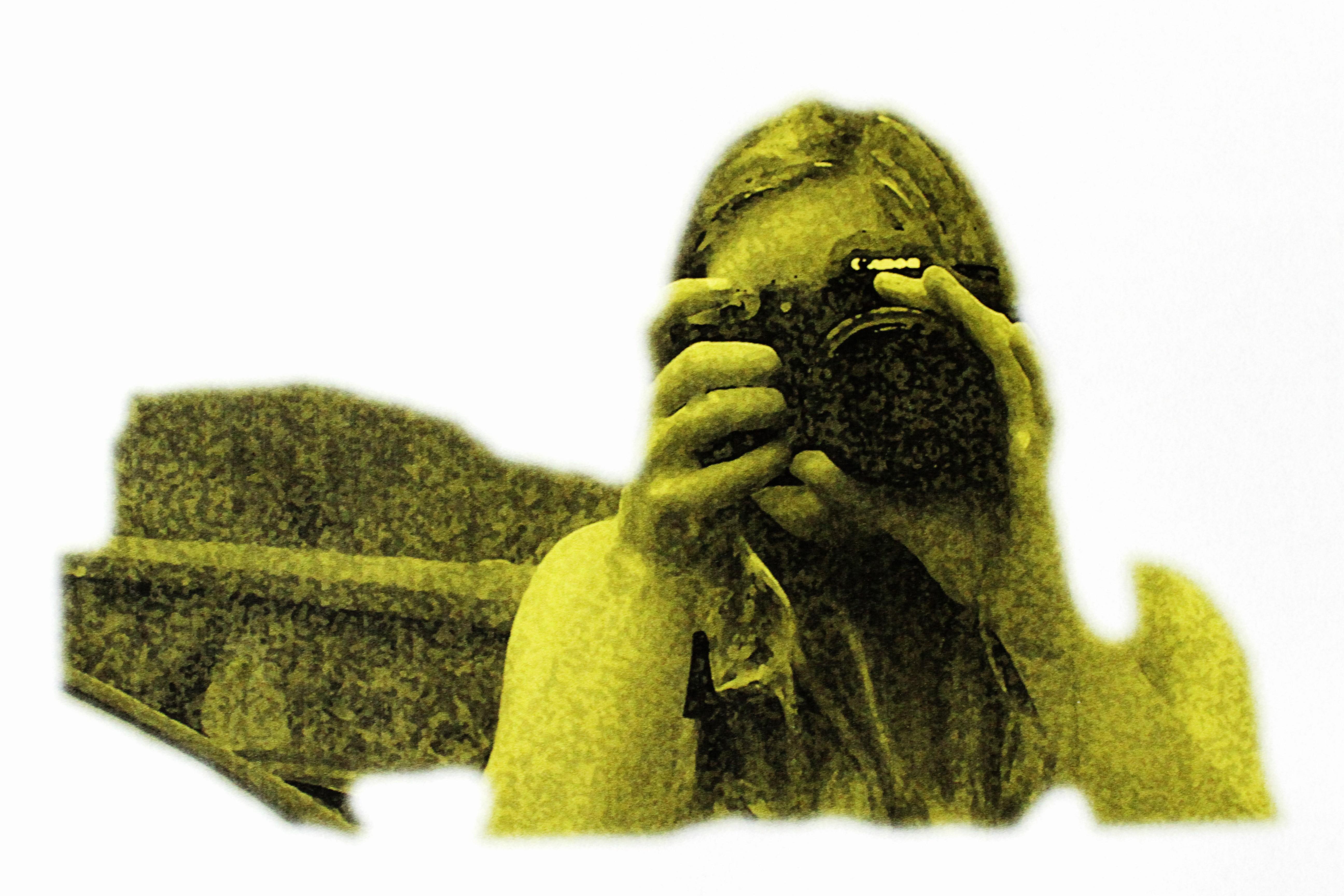
Kim Dodd’s winning image
The winners of the Graduate School’s Images of Research (IoR) exhibition and competition have been chosen!
There were two competitions – 3 winners chosen by guest judge, Roy Wallace, Senior Lecturer in Media Production at the University of Northampton, and a ‘People’s Choice’. The ‘People’s Choice’ competition votes were counted from those on paper at the exhibition at Avenue gallery corridor in February and the university library exhibitions, plus 300 online votes via the Research Support Hub.
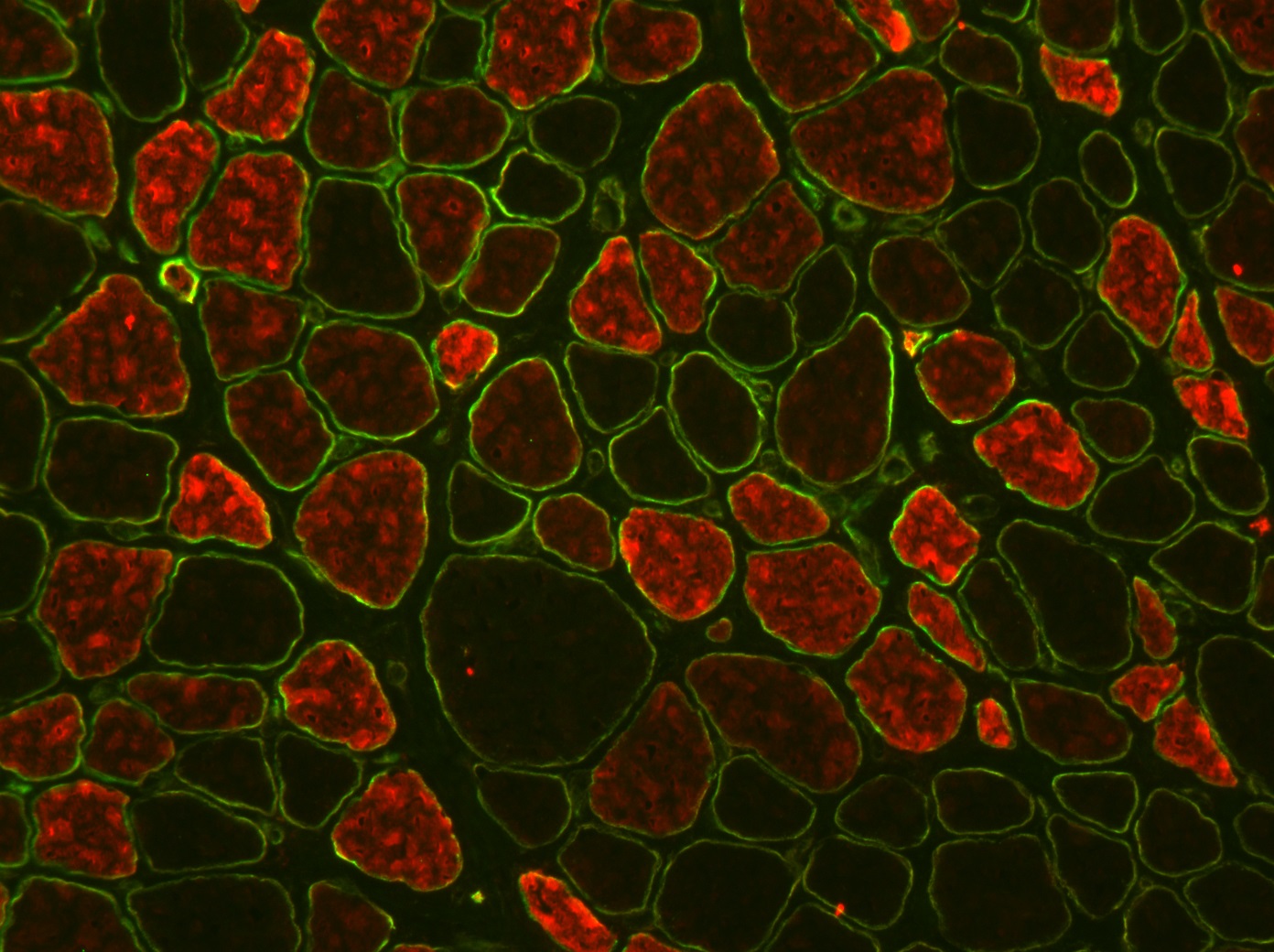
Karen Anthony’s Muscle by Numbers
Congratulations to Kim Dodd, Helen Scott and Charmaine Sonnex who were Roy Wallace’s winners. The People’s Choice winners were Karen Anthony, Carmel Capewell, Meriem Lamara and Emma Whewell. For more information about the winners please see the links above. The Images of Research Catalogue 2015-16 shows all the 2015-16 entries. Read the rest of this entry

Images of Research 2015-16 online poll now closed

Charlotte Dann Images of Research 2014-15
The Graduate School’s Images of Research (IoR) exhibition and competition which opened in the Avenue Gallery corridor on 1st February 2016 is now complete and the winners have been announced.
There were two competitions – 3 winners chosen by guest judge, Roy Wallace, Senior Lecturer in Media Production at the University of Northampton and a ‘people’s choice’, votes from the exhibition and via an online poll. See the Images of Research Catalogue 2015-16 for all the entries. Read the rest of this entry

Online tutorials for PGR students and early career researchers
There are now five new interactive tutorials on the Skills Hub. You will find them in a new section ‘Postgraduate Research Skills‘ on the ‘Academic Skills‘ tab.
- Author bibliometrics – examines the key author bibliometrics and their use
- Journal bibliometrics – explores the use of impact factors and other metrics for ranking journals
- Journals and articles – addresses your publication strategy, journal types and what makes a ‘good’ paper
- Other forms of publishing – covers posters, exhibitions, creative works, website authoring and Open Access publishing
- Networking – making the most of face to face and online networking with fellow researchers

Decade: Celebrating ten years of research at Northampton
 Ten years after achieving full University status and research degree awarding powers, the University is celebrating with a new publication describing some of its current research: Decade: Celebrating 10 years of research at the University of Northampton.
It’s a gorgeous publication showing a wide range of projects and featuring some stunning photographs. Those of you who attended the Images of Research exhibition will recognise a few of them.

Help with public engagement
Following last week’s Graduate School workshop on ‘delivering research impact’, Dr Scott Turner drew my attention to the work of the National Co-Ordinating Centre for Public Engagement (NCCPE).
Scott writes:
 Did you know there is a body, the National Co-Ordinating Centre for Public Engagement, which has been set up to support Universities across the UK to increase the quality and quantity of their public engagement activities. The University has signed their Manifesto.
Part of the NCCPEs remit is proving a wide range of training or CPD activities on public engagement.
Read the rest of this entry

